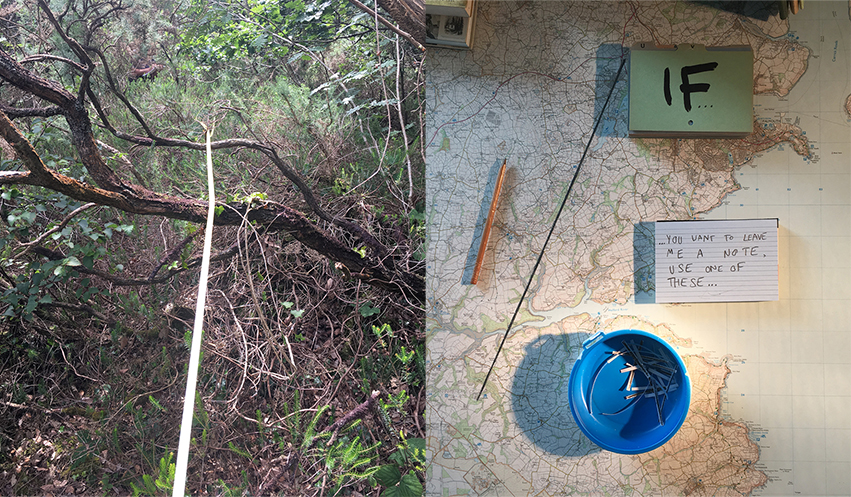
Re/walking Re/wilding: on the tricky natures of nomenclature in A Transect For Trelowarren.
Dr. Bram Thomas Arnold with Professor Caitlin Desilvey.
This is a presentation that is the end of the beginning of a thing I’ve been working on, the thing in question is a project called A Transect for Trelowarren, a transect being a line drawn onto a given space in order to analyse, account for, quantify, measure, or uncover something of that line, Trelowarren being a 700 year old estate on the Lizard in Cornwall, an estate interested in rewilding, regenerative agriculture, reed squirrels and experimental transdisciplinary practices. In collaboration with Arts & Culture Exeter and the University of Exeter’s Environment and Sustainability Institute I have been walking a line from the ESI to Trelowarren with a team of scientists who are also undertaking transects of their own on the Estate. We are living in a time of shifting baselines and A Transect for Trelowarren has set out to ask if a transect can be for Trelowarren, what might it be doing….
Re/walking Re/wilding was written to be presented at the Walking’s New Movement Conference in Plymouth in December 2019. Click below for a PDF of the paper.
Dr. Bram Thomas Arnold & Dr. Lauren Holt.
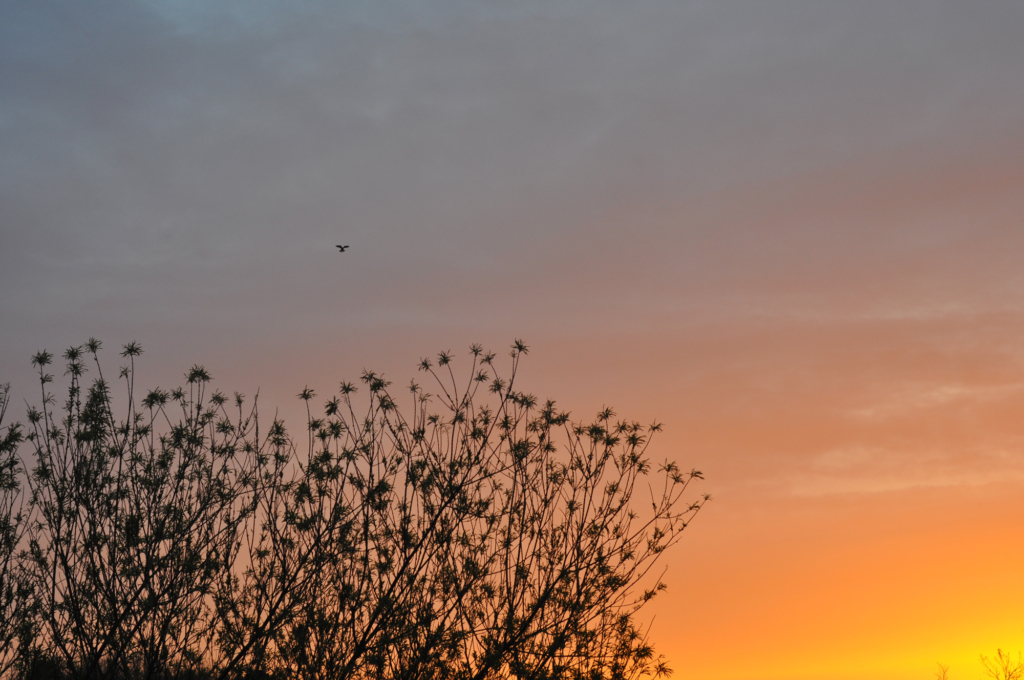
A collaborative paper for a project commissioned by the Centre for the Study of Existential Risk at Cambridge University. A pair of walks, taken in lockdown 1, to think about the intrinsic value of biodiversity, to make a recorded text as an invitation to a group of internationally dispersed philosophers, thinkers and scientists to consider the intrinsic values of biodiversity.
“Biodiversity is the grand mass of everything in that short stretch of atmosphere between the floor and the edge of the sky…
Biodiversity is the collective outcome of 4.6billion years of experimentation, without aims, hypothesis, methods or madness…
Biodiversity is wrens, and blackbirds, and blackcaps and bullfinches, bramble and celandine, songthrush and gorse, mineshaft and wasteground, high street and high summer…
Biodiversity is everything between you and me…
Biodiversity has no moral position, no intention, no doubt, no plan, no hope, but rich fecundity…
Biodiversity is everything you have ever seen and indeed the very possibility of seeing itself…”
Towards Eco-logical footprinting.
Presented at the George Ewart-Evans Centre for Storytelling, Cardiff. April 12th, 2019.
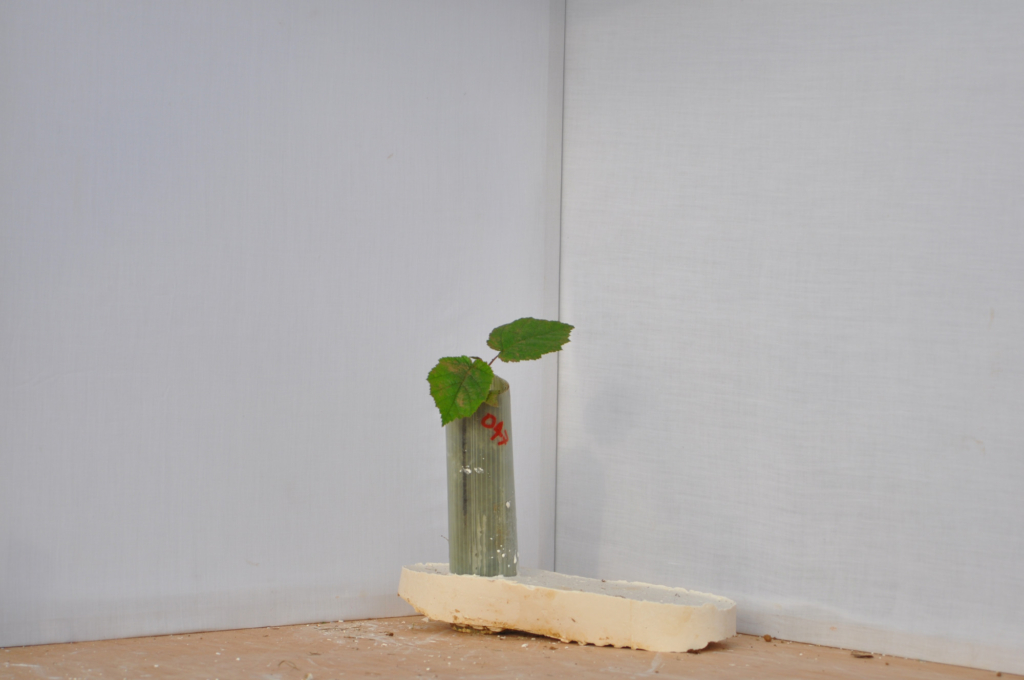
This presentation aims to expose the horror of questions and concerns as we enter a new dark age, wherein technology claims to answer all our questions, yet answers in a language we can never fully comprehend, interpret or even grasp. This haptic distance alienates us from the places we live in and the people we live with and also from the places we touch without ever going there, and the people we do harm to, without ever even seeing them. It is full of contradiction, futility and hope, and hopefully manages to contradict futility.
A Belgian Transect: Field Broadcast in the expanded field of ecology.
Bram Thomas Arnold, Rebecca Birch and Rob Smith
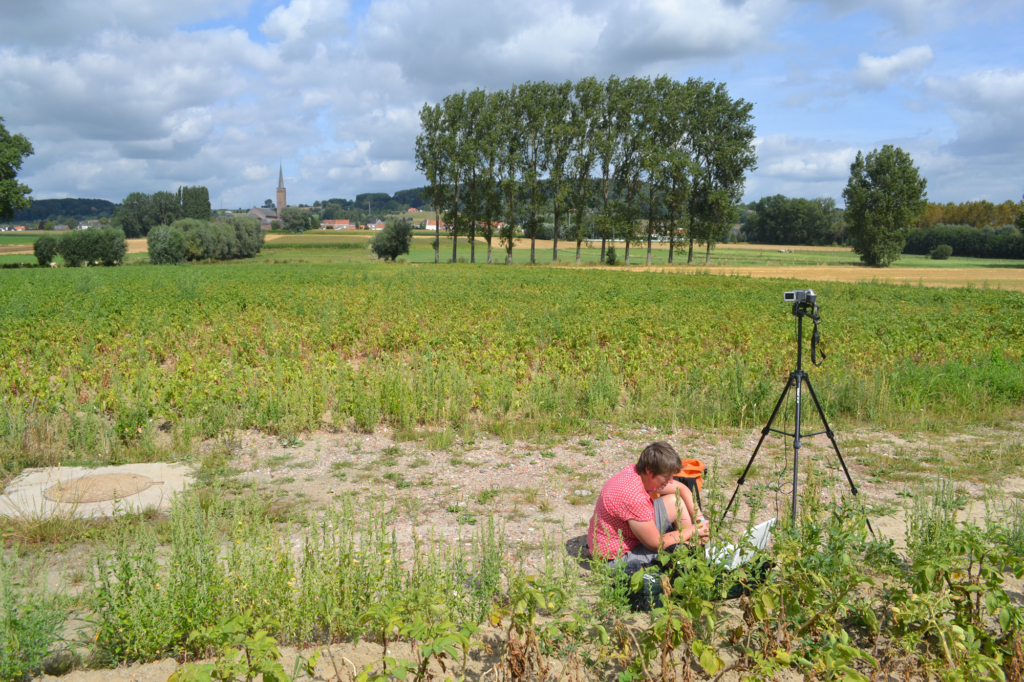
This article sets out the notion of a Field Broadcast from the dual perspective of Rebecca Birch, one of the developers of a bespoke version of Flash Media Live Encoder and Bram Thomas Arnold, an artist who uses a case study from Sideways Festival, Belgium, 2012. Field Broadcast enables an artist to be in a field, suitably equipped, and stream live footage to an audience. It is an experiment in place, site and the notion of a field. It is a new method of making work in the space between site-specific performance and the digital realm: a way of working that enables artists to generate new artworks within the non-place of the Internet. Birch introduces the technology from a number of perspectives before it is fleshed out with evidence and experience from a live project that took place in Belgium in 2012. Sideways was a festival that traversed Belgium over four weeks and 400 km, with artists walking and generating work en route. The possibilities offered by Field Broadcast are explored in relation to the expanded field of ecology amidst Bourriaud’s The Radicant (2009), Guatarri’s The Three Ecologies (2005) and Morton’s Ecology Without Nature (2007).