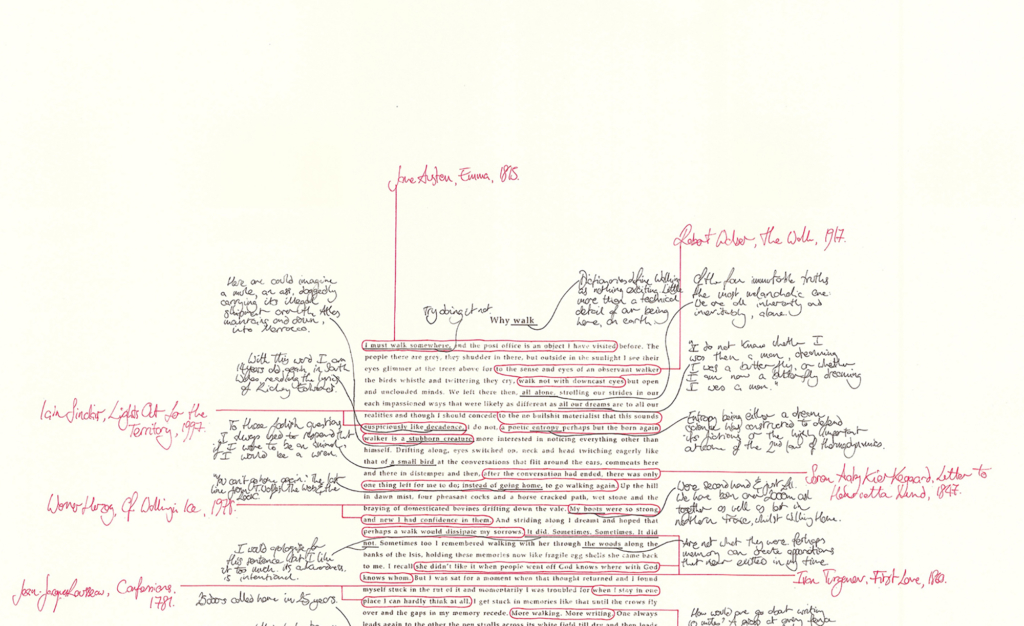
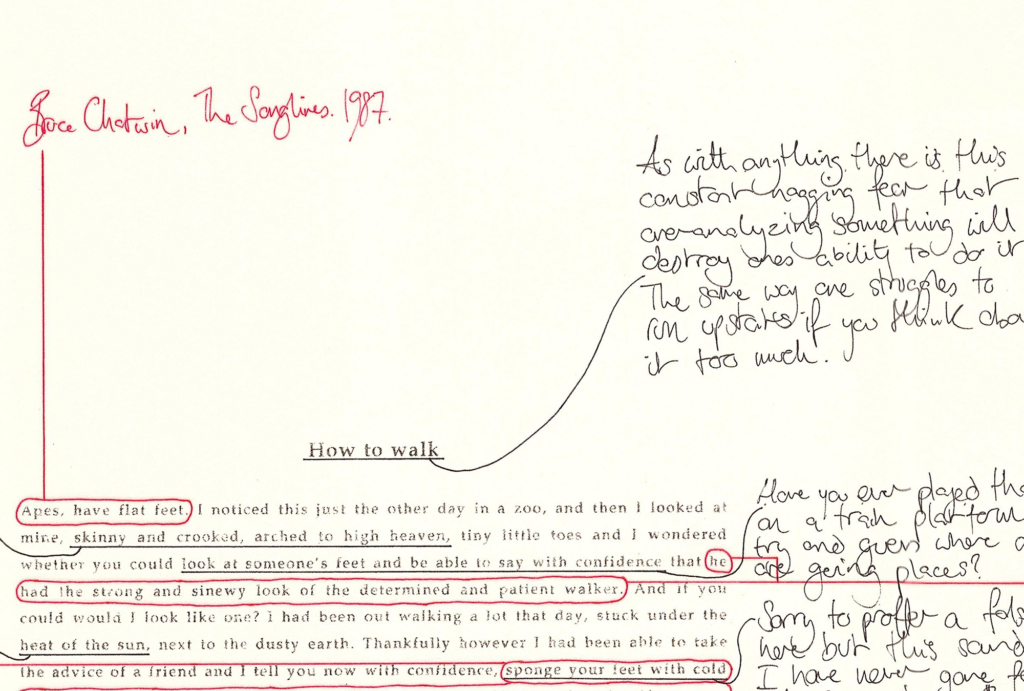
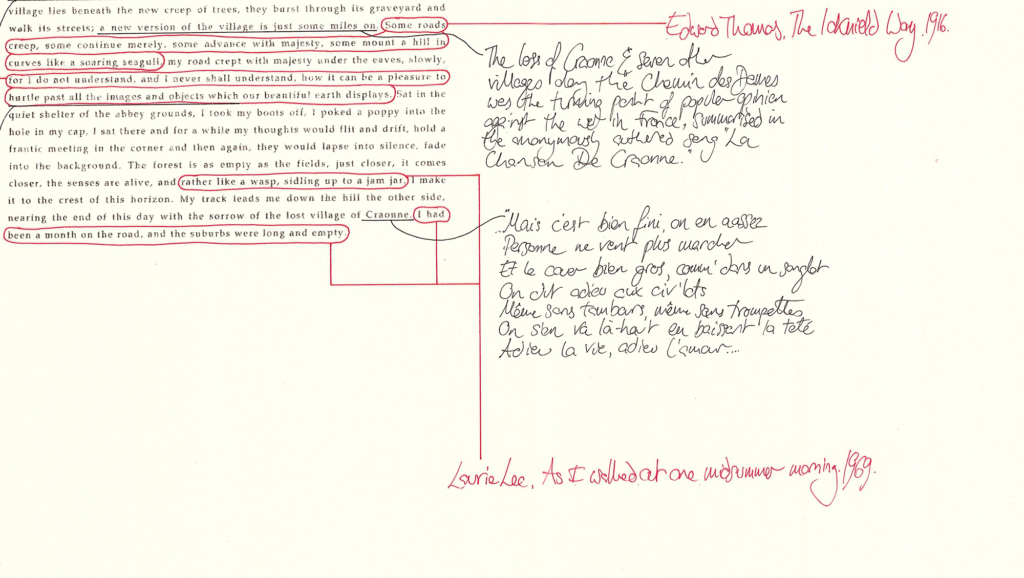
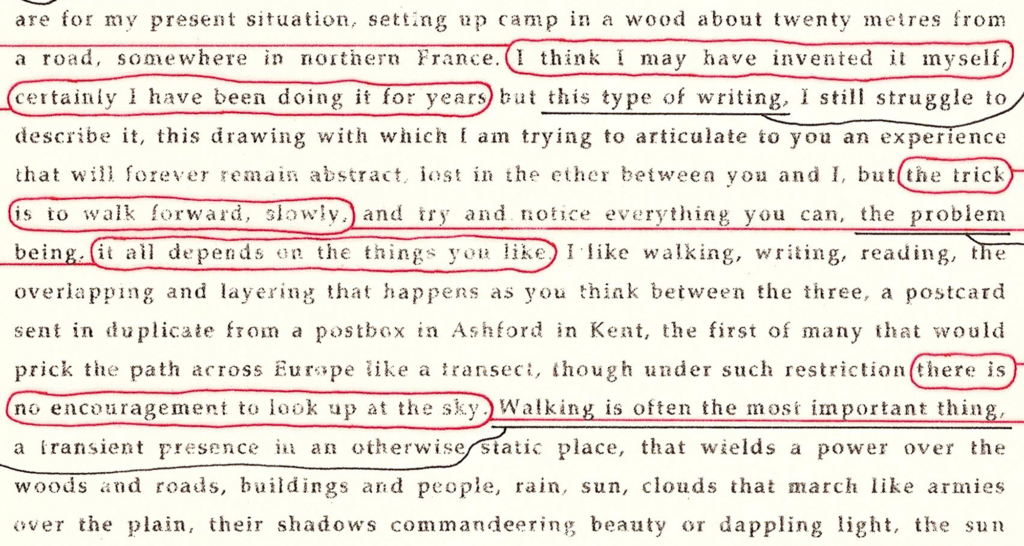
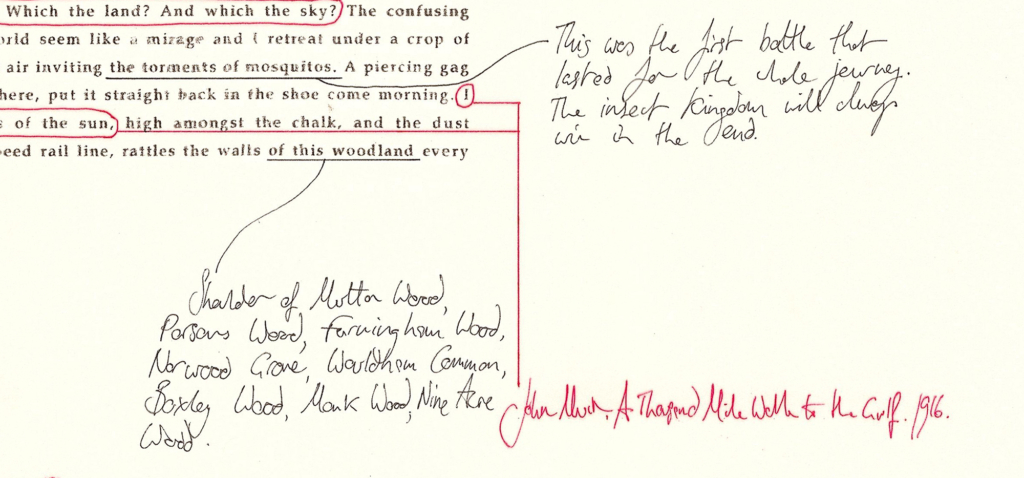
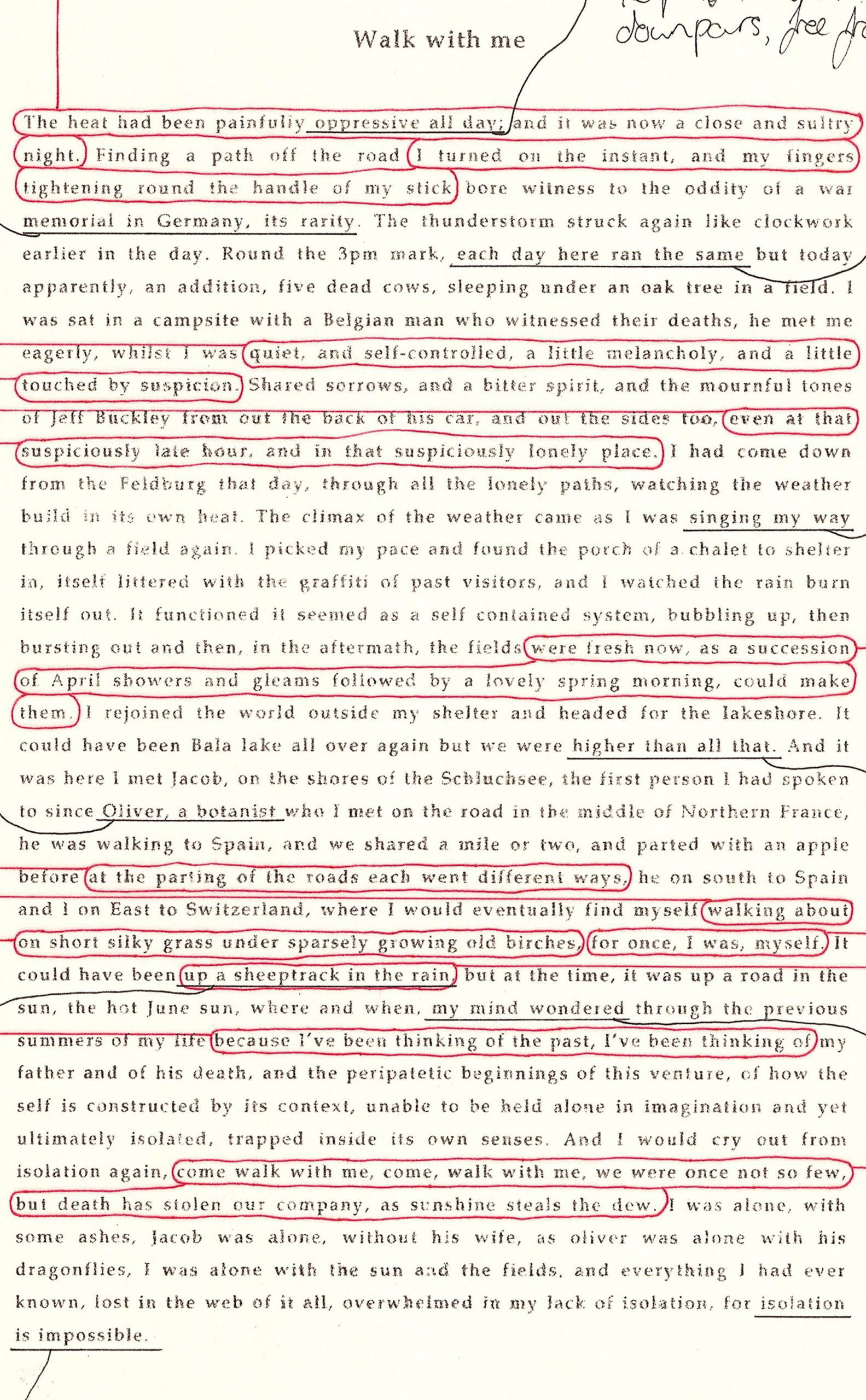
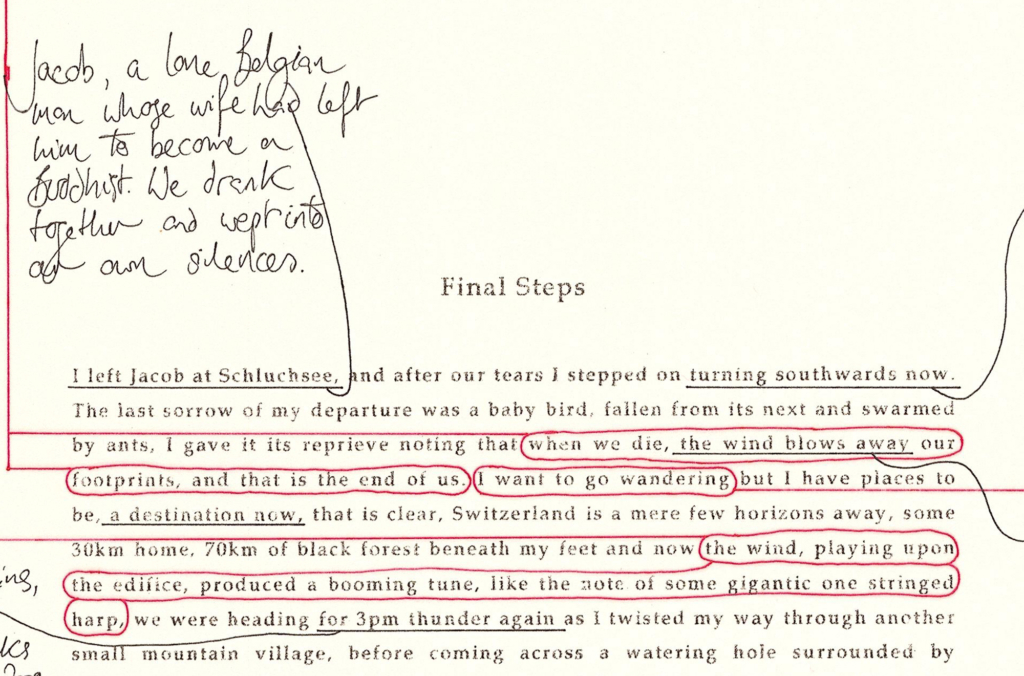
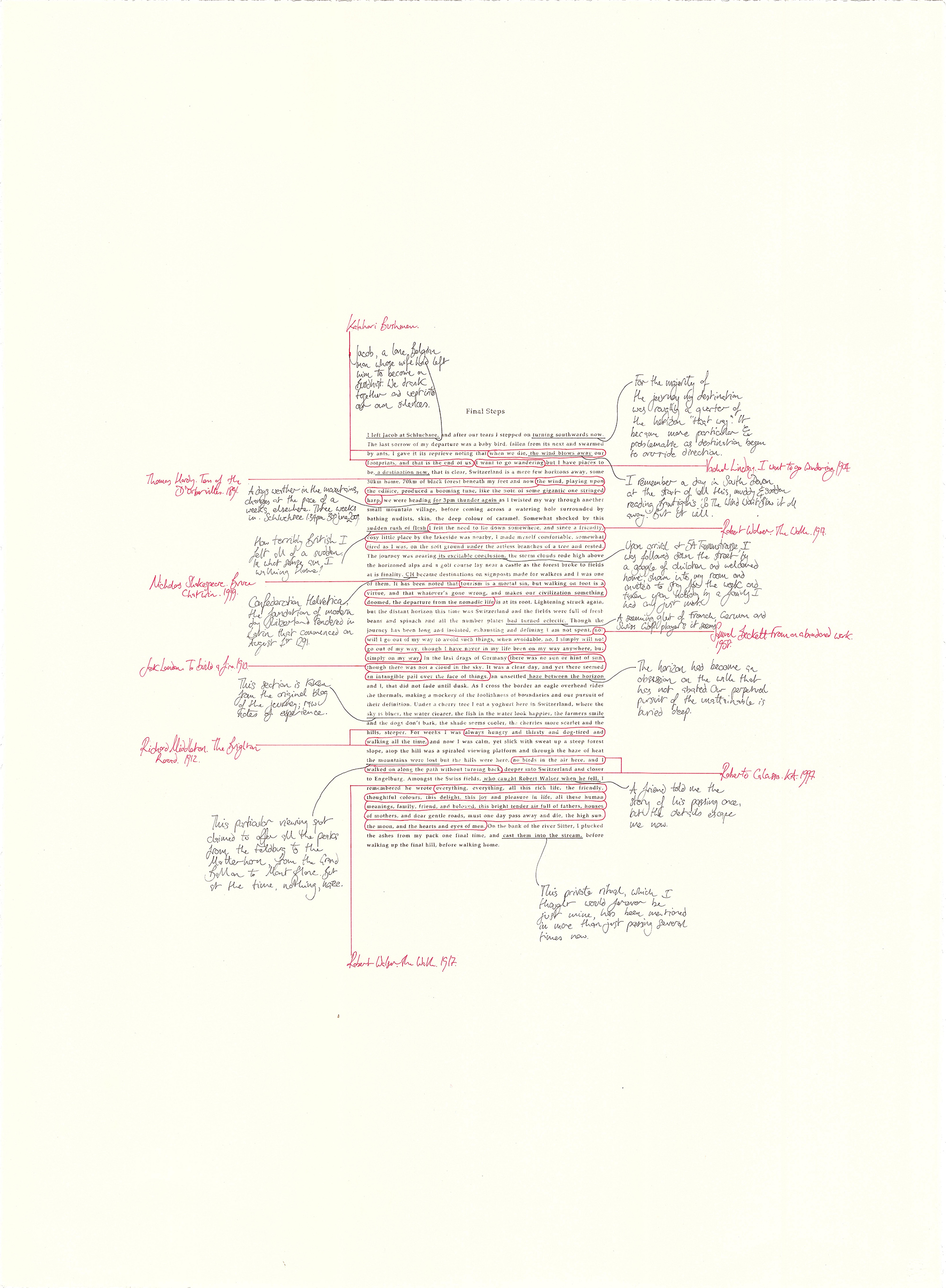
How To Walk, Parts 1-9, is a text drawing that formed the spine of my PhD. Below is an extract from my thesis that introduces the work… The drawings are to form the basis of a forthcoming publication with Emily Juniper of Utter & Press.
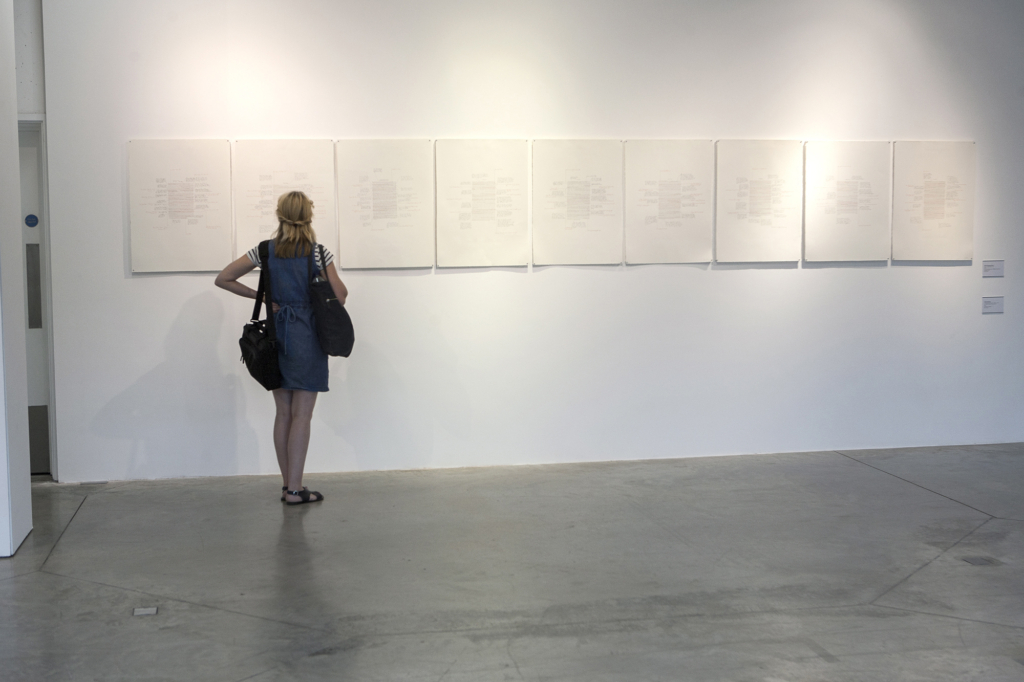
The piece won the Plymouth Contemporary Open Audience Choice in 2015. Selected by Helen Legg, Director, Spike Island, Bristol; Sam Thorne, Artistic Director, Tate St Ives; Judith Robinson, Partnerships Officer, Plymouth City Council; Dr Sarah Chapman, Director, Peninsula Arts; Chris Cook, Associate Professor (Reader) in Painting, School of Art and Media, Plymouth University and Professor Alan Schechner, Head of School of Art and Media, Plymouth University.
Bram Thomas Arnold | ATOI (Amy Thomas and Oliver Irvine) | Dan Beard | Harriet Bowman | Jennifer Boyd and Alice Williams | Jessie Brennan | Bristol Diving School | Chloe Brooks | Michael Cox | Tim Foxon | Naomi Frears | Laura Gower | Jane Hayes Greenwood | Will Kendrick | Samuel Levack | Jennifer Lewandowski | Cathy Lomax | Mateusz Marek | Pilar Mata Dupont | David Morgan-Davies | Ailbhe Ni Bhriain | Steven Paige | Sarah Poots | Michael Porter | Ryan Ruaidhri | Paul Vivian
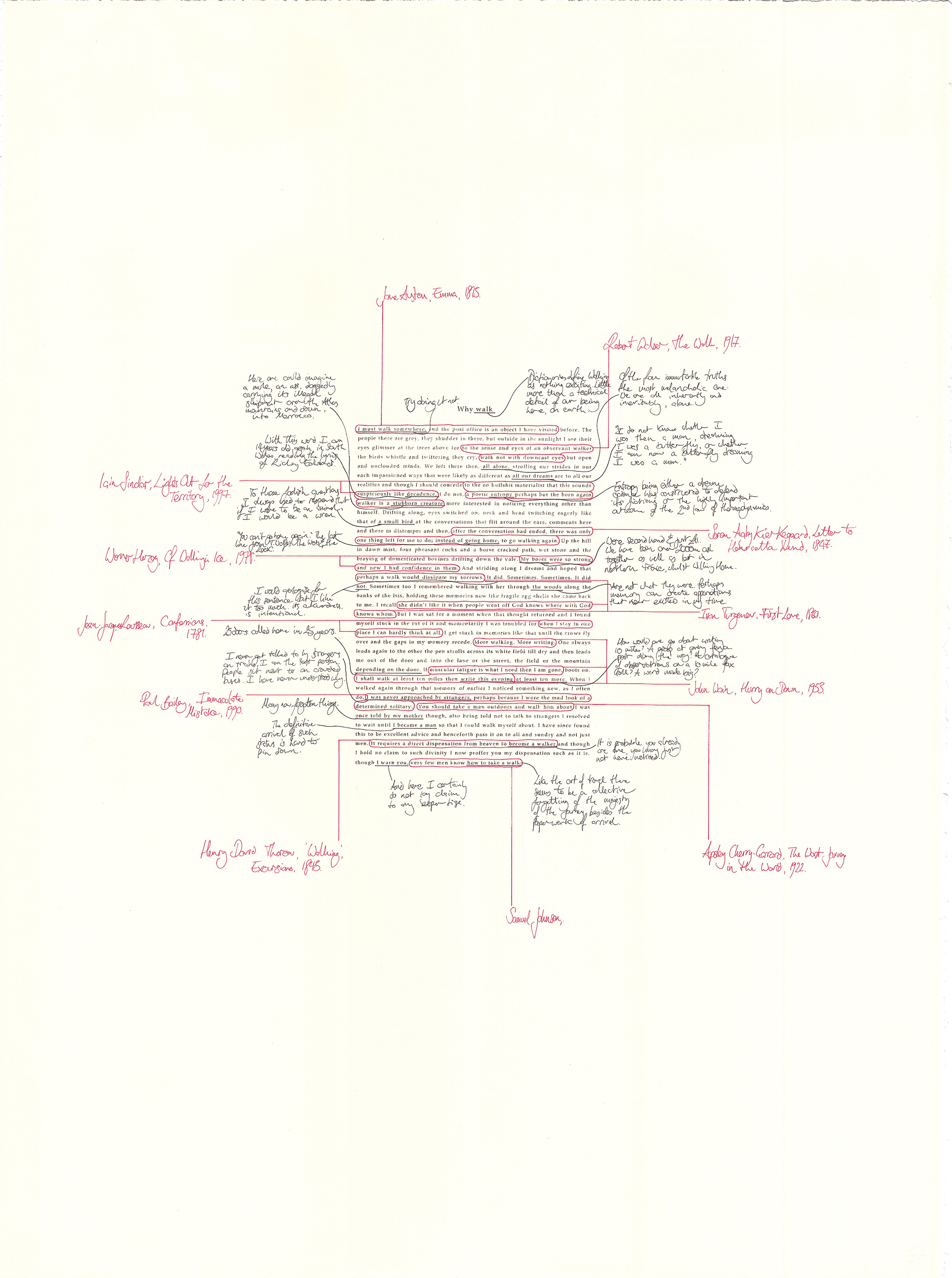
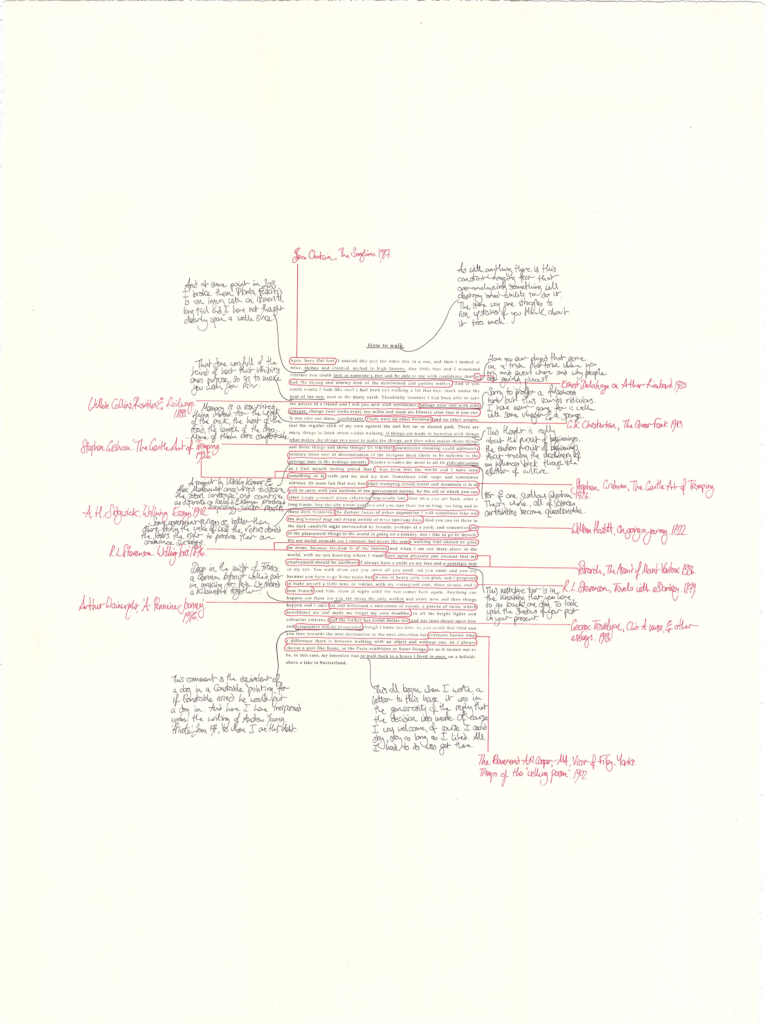
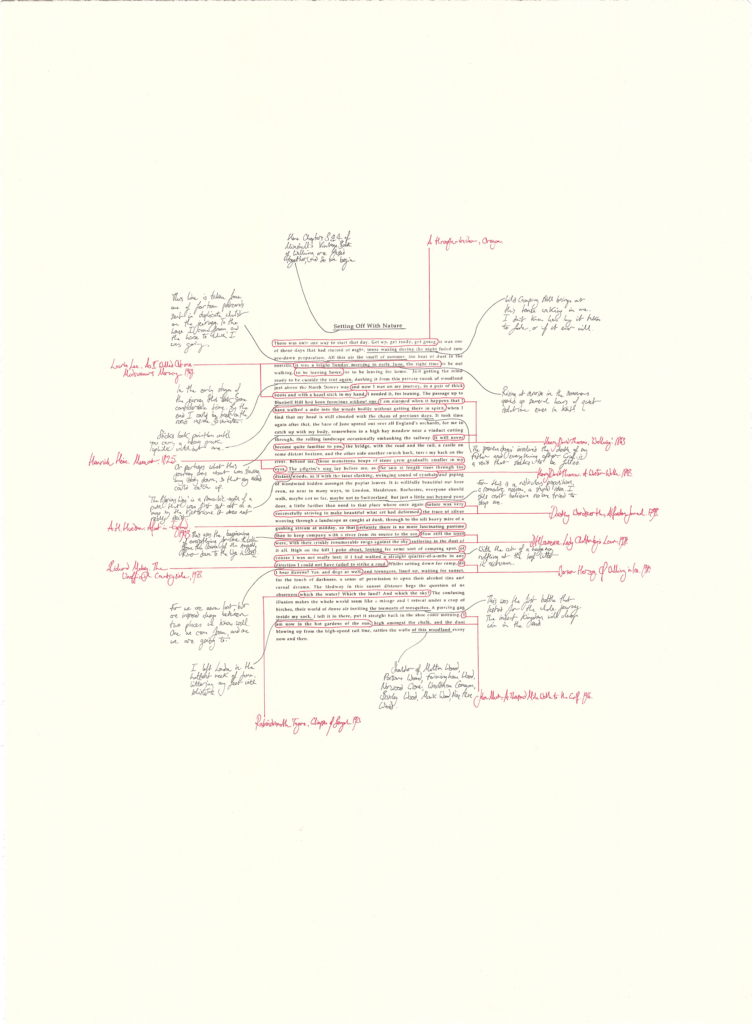
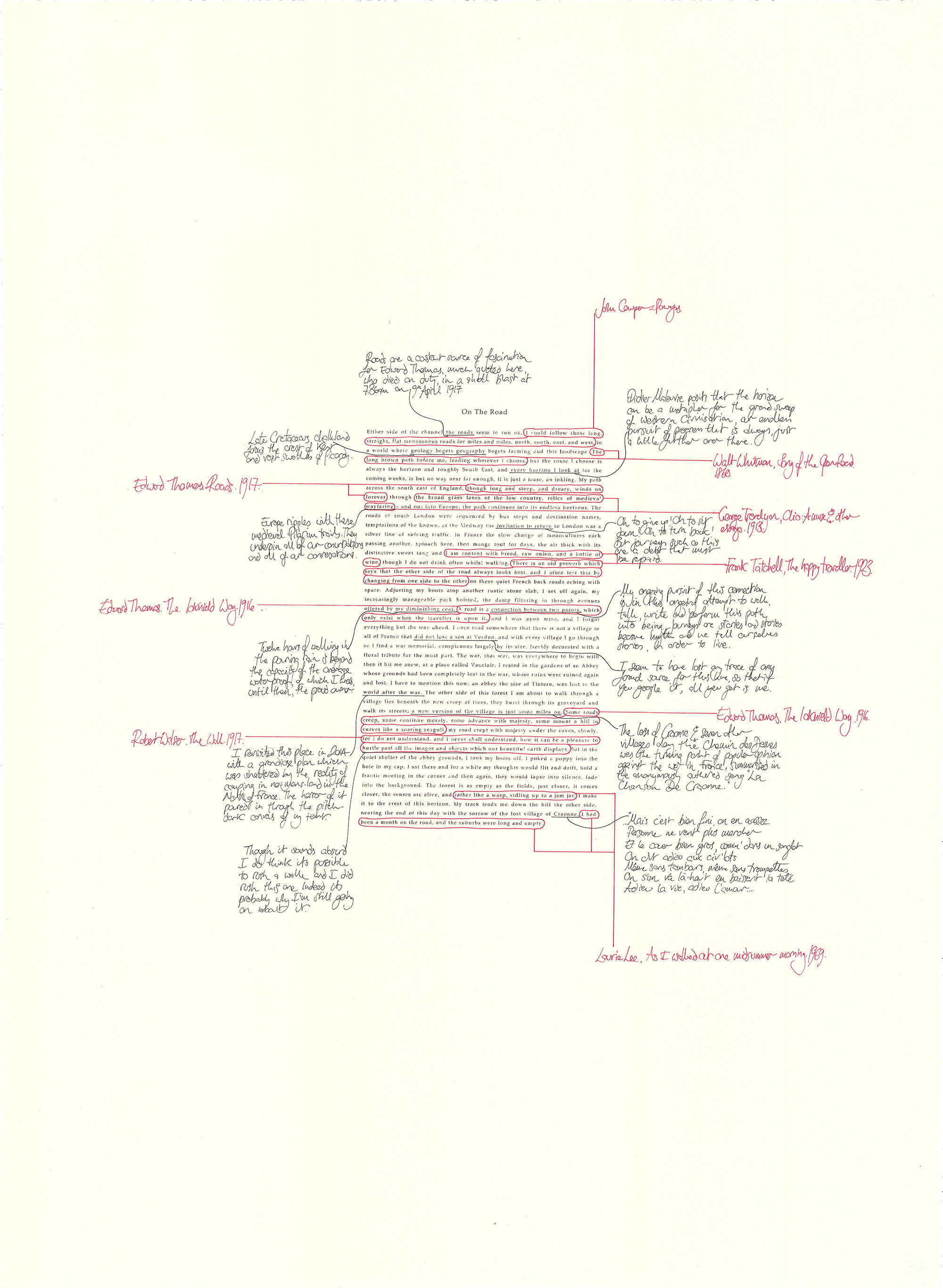
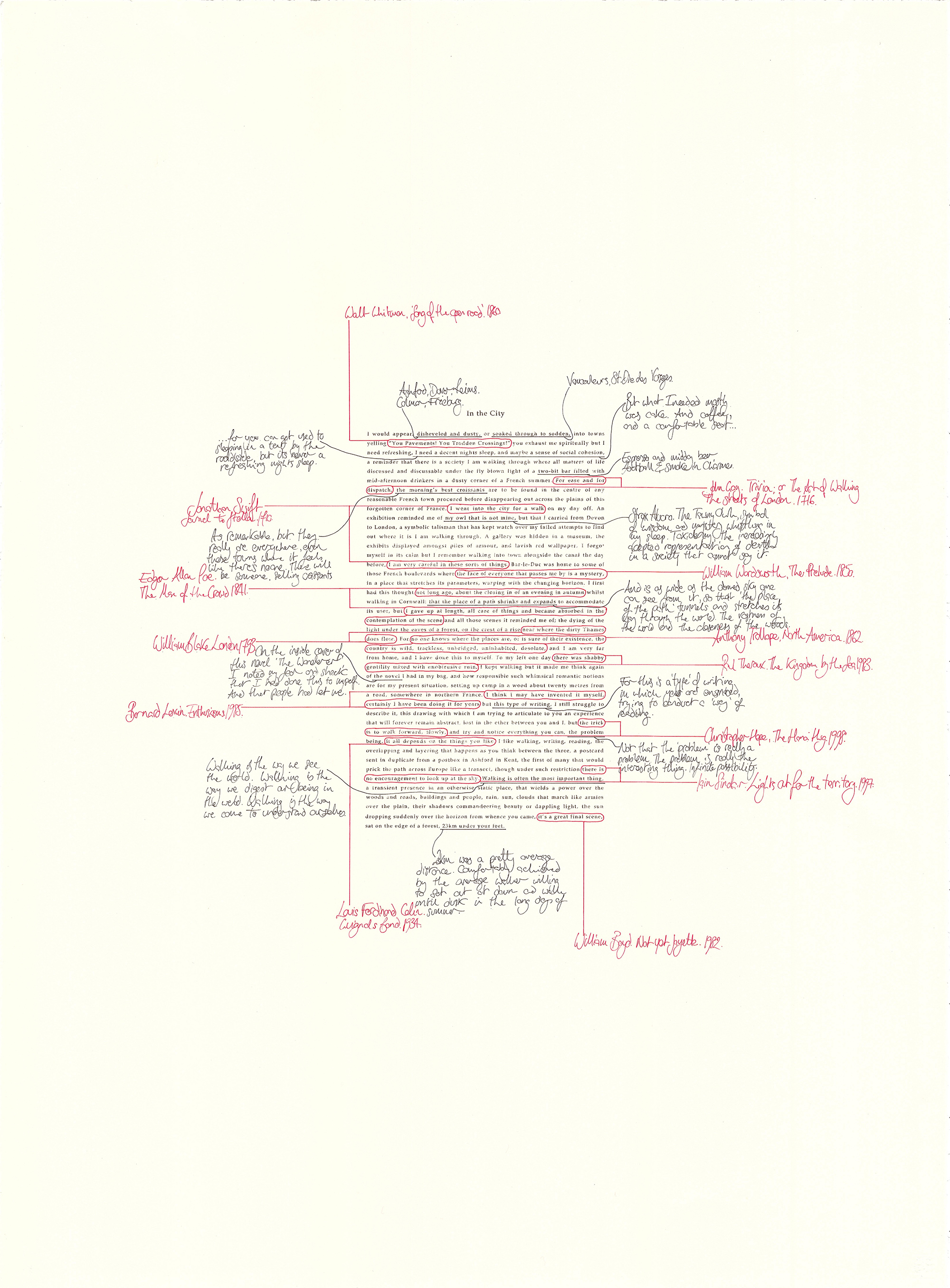
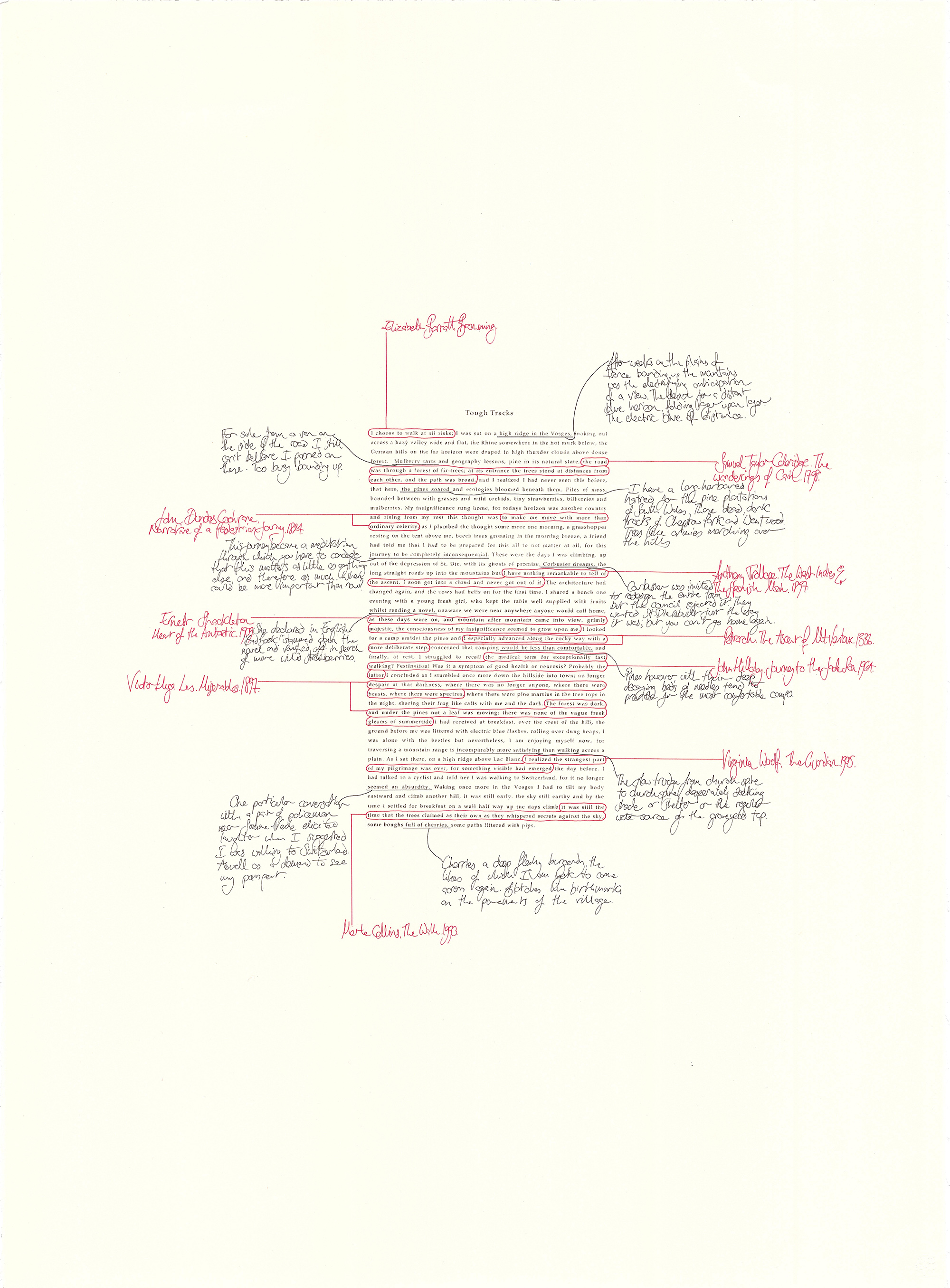
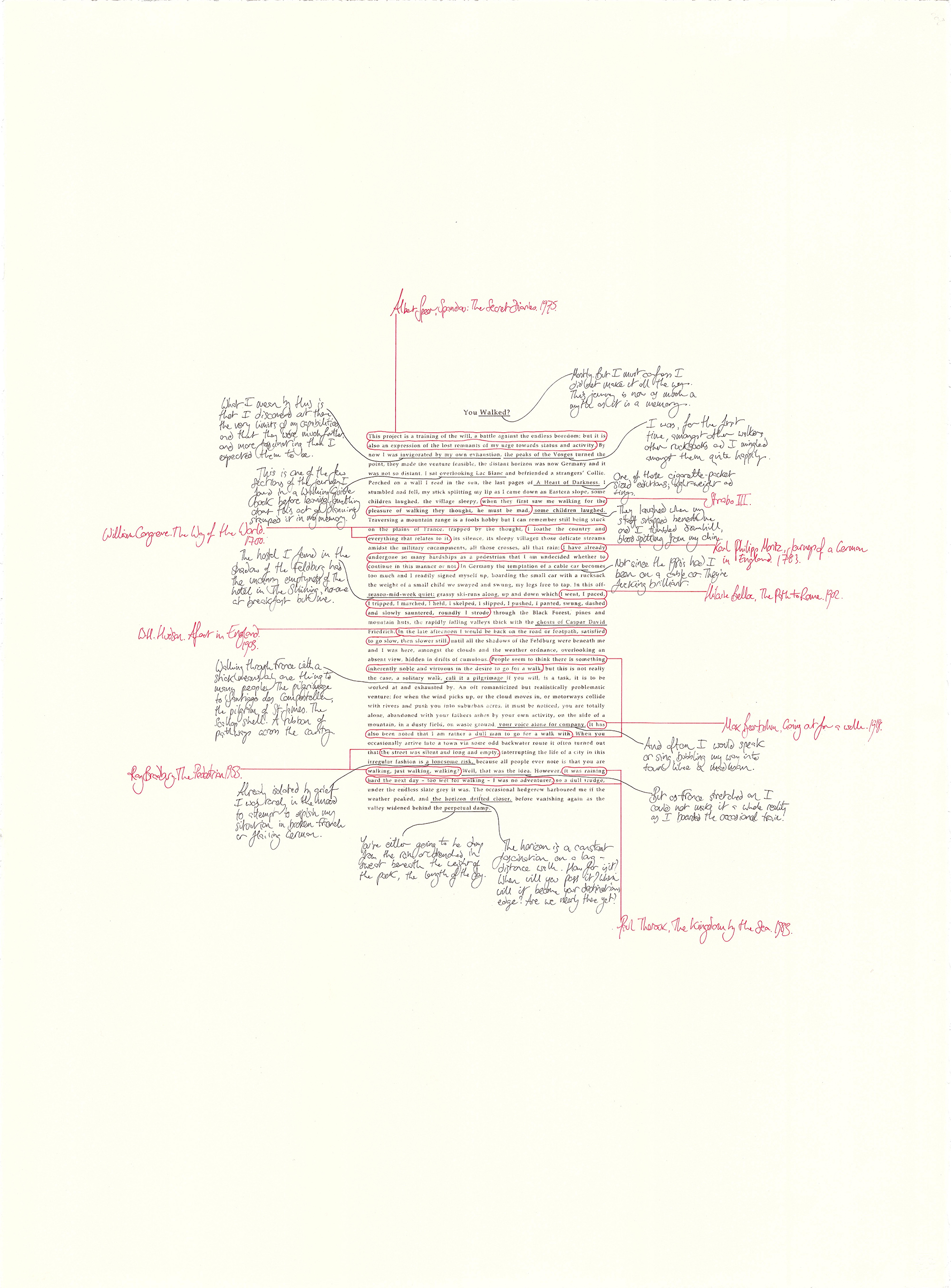
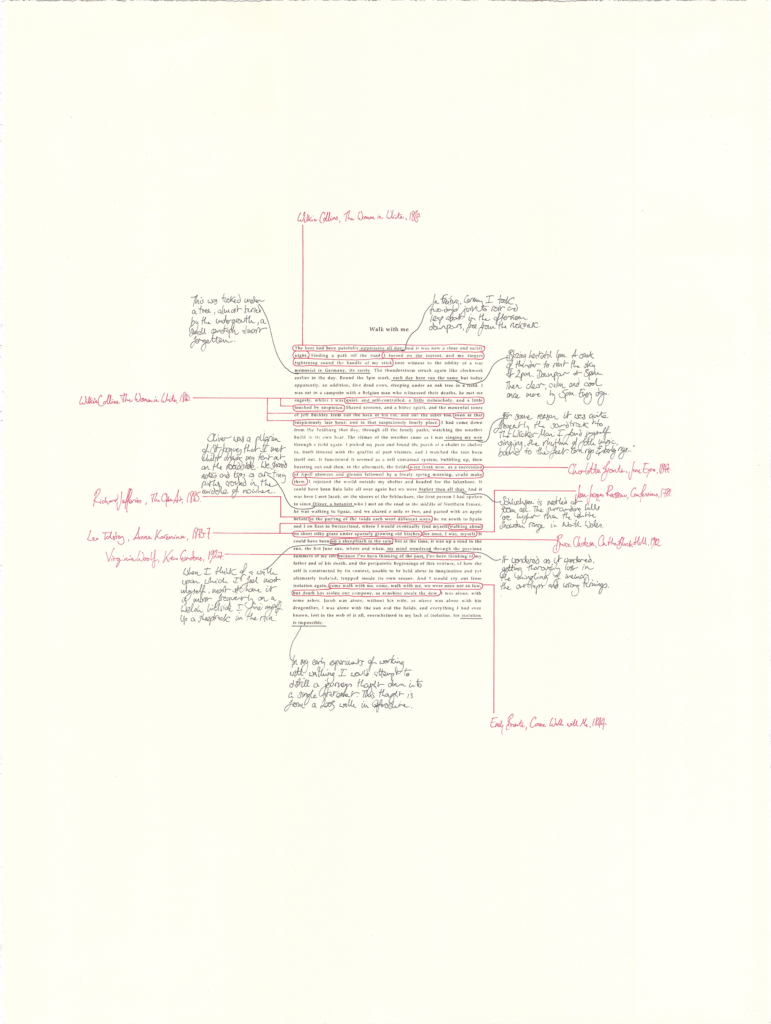
How to walk into writing, installation and performance.
“Why Walk was written and printed in 2008, the year before I walked to Switzerland. Its writing style is intuitive and light, to the extent of being naïve, intentionally contradicting the physical, documentary and formal nature of printing, the commitment involved in creating a document (Verwoert in Neuerer 2003: 9). As can be seen in Fig 4, an A3 fold out of Why Walk; a text is constructed from snippets extracted from Minshull’s anthology, from writers who may or may not be famous for writing about walking but have done so, these snippets are then interspersed with a narrative of my own. The extracts and half sentences are sourced from Duncan Minshull’s compendium for Vintage, the source for the nine text/drawings that make up the series How To Walk. Minshull’s text is a compendium of occurrences of walking throughout the history of literature, going back as far as Petrarch’s 1336 account of his scaling of Mount Ventoux and coming as far forward as Herzog’s eccentric 1976 pilgrimage entitled Of Walking In Ice (Herzog 1991). Minshull’s original text is broken into chapters, the titles for which I have borrowed as the individual titles of a series of drawings that lead the reader/viewer along the journey from London to Switzerland, whilst binding my practice to that of some of the originators of the development of walking as a practice and in particular its relationship to writing, whereby Wallace suggests the peripatetic practitioner aims “toward the re-creation of the self, reconnection with nature and so with the divine, continuity of sense, mind and spirit, community and connection with a communal past” (1994: 17). These texts are multi-layered with several ways of reading them offered to the audience; they engage emotionally with the personal experience and memory of the walk, whilst locating the practice culturally, by placing the text drawings playfully amongst the canon of Romantic and peripatetic writers.”
Details from each below.
The full works can be seen in detail through my PhD thesis…