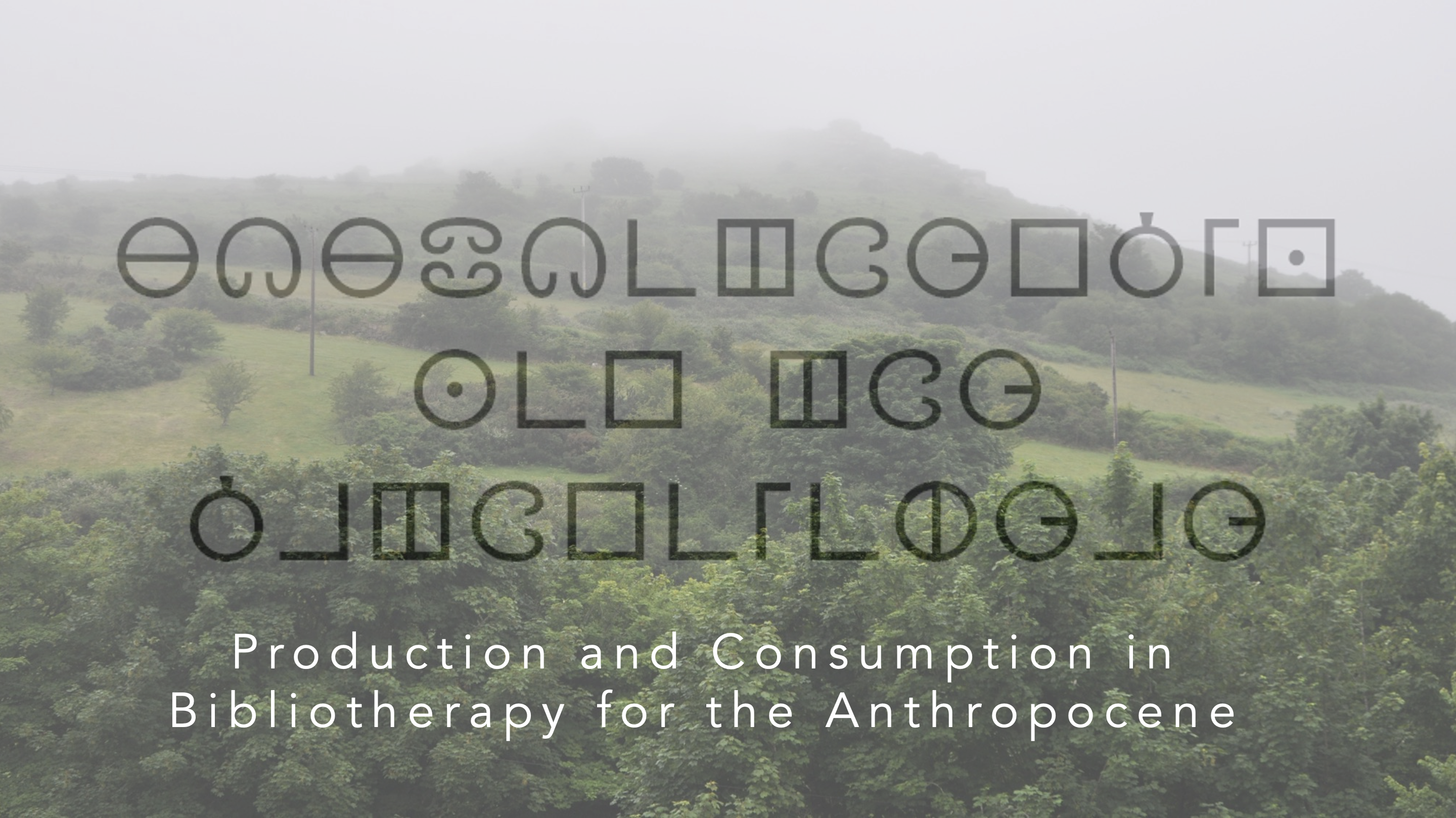
Production and consumption in Bibliotherapy for the Anthropocene

Journal Publication.

A paper that was born out of a presentation at the Royal Society of Arts in 2022 has just gone live on Landscape Research Journal. The article is open access and downloadable as a PDF which I recommend as it’s a photo essay that the internet version of the paper struggles to present in its full glory.

https://doi.org/10.1080/01426397.2025.2516011 

Abstract:

This paper will span a timeline from the online meeting Art, Ecology, Emergency: Sustaining Practice, coordinated by the Eden Project, that took place under lockdown in 2020, through to the summer of 2021 and an event in a series of fields on the Lizard in Cornwall. This paper will draw on the methodological development of Bibliotherapy for the Anthropocene, which is a performance in the guise of a reading group, a cross between a Quaker meeting and a reconvening of the Dead Poets Society, and subsequently a collaboration with the University of Cambridge’s Centre for the Study of Existential Risk. Throughout this paper, the author will evidence how arts practices that are cyclical and performative can embed creativity and democracy into conversations taking place in and around landscape decision-making.


Locus Sonus for FSA

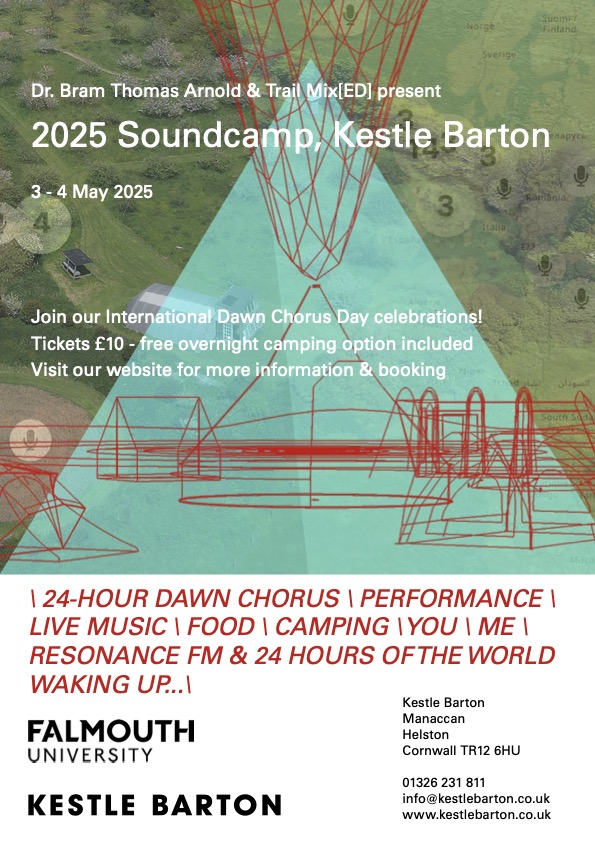
Poster image for Soundcamp, Kestle Barton 2025

Locus Sonus for FSA.

With funding from Falmouth University I hosted this years Soundcamp at Kestle Barton on the Lizard in Cornwall. I will be setting up a permanent microphone on campus at Woodlane in the coming months. This will become available on the ecological radio platform Locus Sonus Map before September.

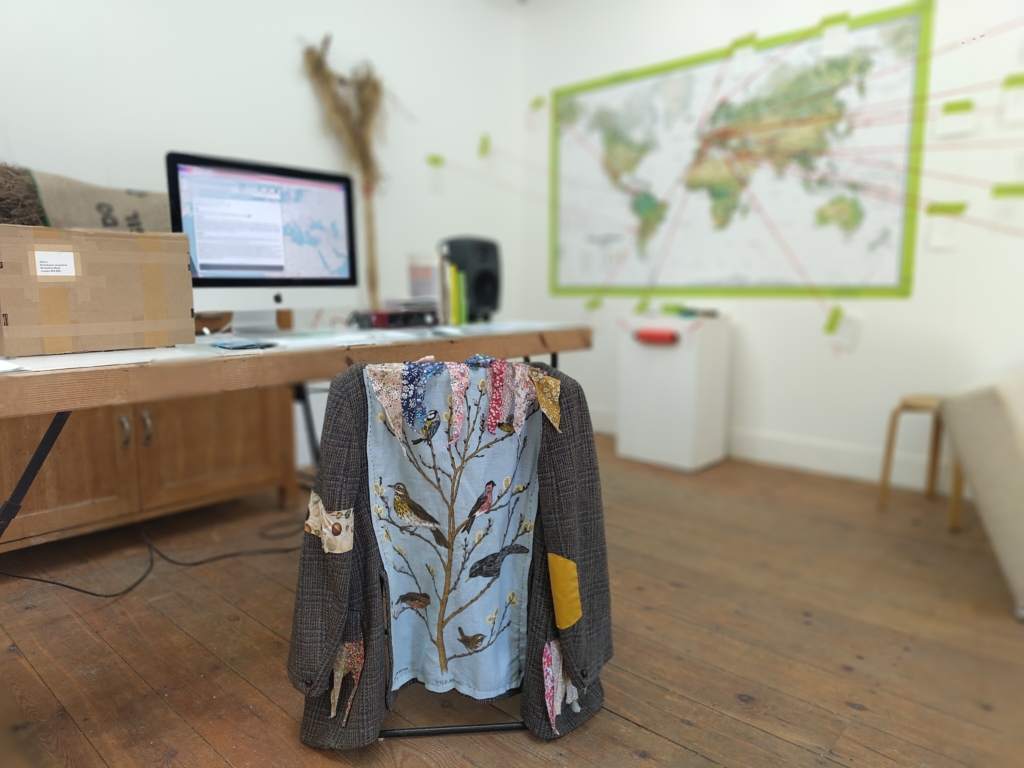
The Studio, Kestle Barton.
Installation shot, the Studio, Kestle Barton.


Soundcamp 2025

Soundcamp 2025:

What exactly is Soundcamp Bram? Well, it’s a global project that sees hundreds of institutions, venues, artists and scientists live stream dawn from their location, the output from these microphones is streamed via Resonance FM in London and via the internet creating a 24 hour soundtrack of the world as the sun rises, as the world turns. The event at Kestle Barton is the opportunity to join Dr. Bram Thomas Arnold, HUM choir, The Worm and a local ornithological expert in an orchard to experience the simple wonder of existence whilst listening to the world wake up…

HUM:

Who exactly are HUM choir Bram? Well, I met them in Penryn, singing in a field and they were all wearing block colour outfits stood in front of a field of ancient grains. When I asked them for a description of themselves they said “Hum is a collaborative community singing group based in Penryn. They sing folk music including music from othger countries and traditions.” They also said if I wanted to say anything else about them they would have to run it past the rest of the group which is just the sort of anarchic democracy that I like the sound of so they are playing.

The Worm:

Who exactly is the Worm Bram? Amy Lawrence is a multi-instrumentalist who I have known for years in and out of fields in Cornwall, she once came to a soundcamp with just her Cello and played for the birds and for us while we had our breakfast, this time, she will be joined by a friend, a harmonium and a cello amongst other bits and bobs and be playing under her new moniker The Worm at Kestle Barton this Saturday evening… just as we enter nautical twilight.

What is there to eat Bram? Tickets come with complementary pasties from Gear Farm, and locally baked cakes and pastries for breakfast… All with camping for just £10. Tickets via… https://www.eventbrite.co.uk/e/soundcamp-2025-kestle-barton-tickets-1312769170929?aff=oddtdtcreator

Katie Patterson’s The Future Library.

Katie Patterson - The Future Library 1

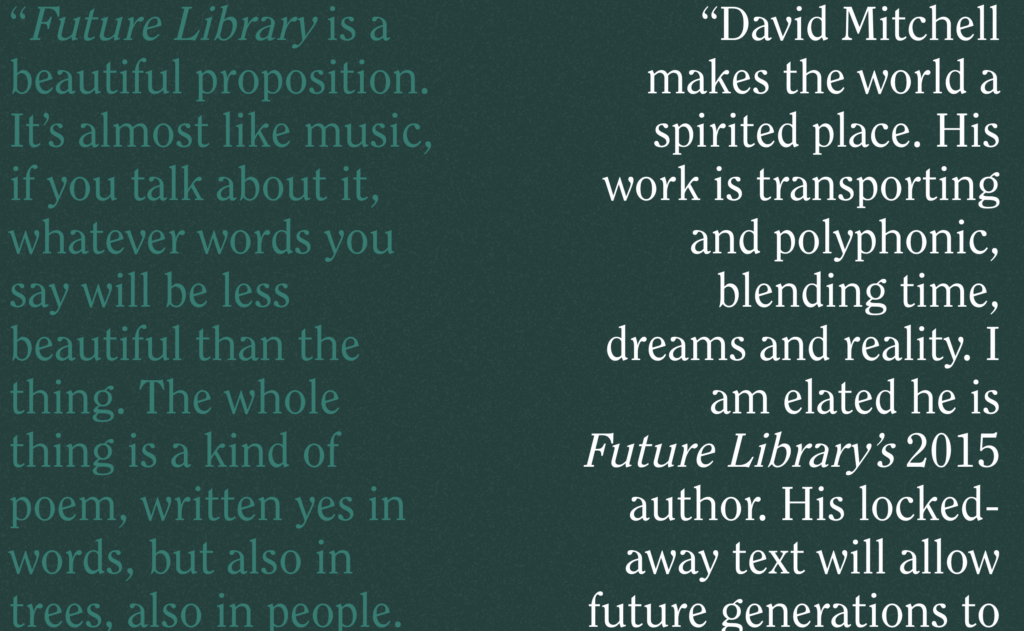
Screen grab from David Mitchell’s page on The Future Library.


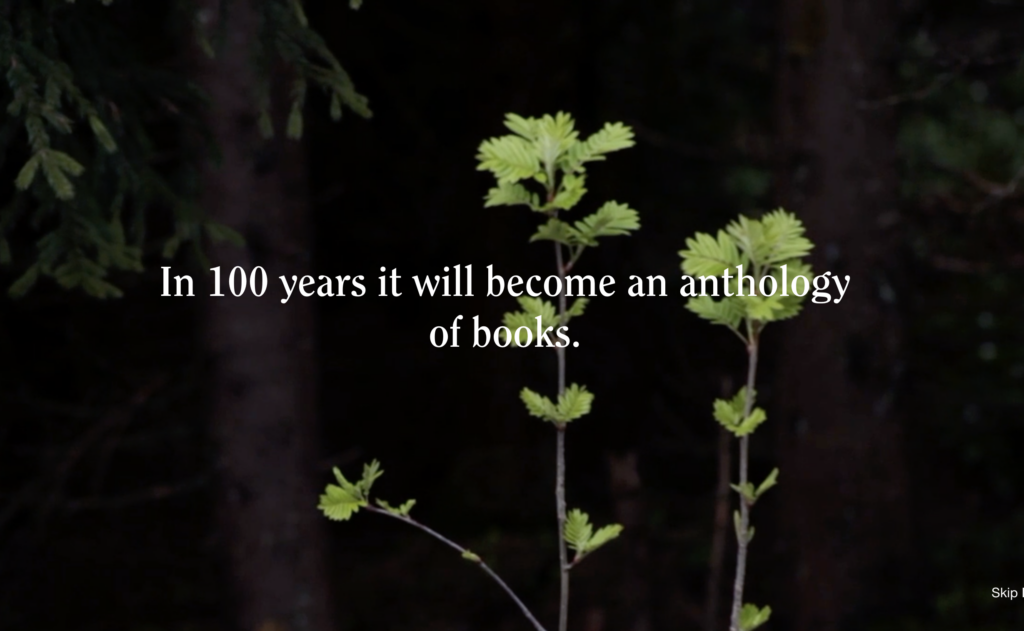
The website loads for a little moment, – and by that I mean pieces of data travel through the ether in my office from some untouched fibre optic cable through the physical web of connections that trace us to the physical entity that is the internet – and then there’s a voice, soothing, describing a woodland, a forest in Norway, being planted and maintained, we’re ten years into this work now, it’s timeline set from 2014 to 2114, the trees are growing, manuscripts from authors as revered as Margaret Atwood and Han Kang are being held in trust.


The artwork speaks to our desire for community, for a sense of continuity into the future whilst accepting that such a time may not come to pass, there are plans for these books to be published and housed in a timber library, there are the 90 years to come. The work engages with the inevitable temporality of the times we find ourselves in. Each of us here – and by here I mean in the internet, on one side or the other of a screen whose production necessitates both the toxic emission of sulphur hexafluoride (Citton, 2016: 198) and the subterranean accumulation of Coltan and its affiliated child labour issues in the DRC (Ojewale, 2024) – is in possession of a device that is capable of telling us everything that humanity has ever bothered to record, and therefore we are bound into a temporal conversation that fights for our attention, we are aware of our ability to access the information from the past, aware of the collective problematics facing the future and bound into distraction by an economy that needs us to keep looking away (Bishop, 2024: 26).


The Future Library then, is a beacon of hope, a sprawling prospect that gathers traction over its years and is growing both as an artwork and as a cultural artefact. I download a PDF, written by Margaret Atwood to accompany her deposit made in 2014, who concurs to this hopeful disposition, speaking of the forest enabling her to believe that things like the ‘library’, the ‘forest’ and ‘Norway’ “despite climate change, rising sea levels, forest insect infestations, global pandemics, and all of the other threats, real or not, that trouble our minds today – will still exist.”(Atwood in Patterson, Katie, 2024) It is a place I hope to visit one day, and to hope to visit somewhere is to play the game of having a future to look forward to, which is where, I like to think, our engagement with art resides.   Katie Patterson - The Future Library 2 Katie Patterson - The Future Library 3

Screen grabs from the home page of Katie Patterson’s The Future Library. https://www.futurelibrary.no/


Bishop, C. (2024) Disordered Attention: How We Look at Art and Performance Today. Verso Books.

Citton, Y. (2016) The Ecology of Attention. 1st edition. Cambridge Malden, MA: Polity.

Ojewale, O. (2024) Child miners: the dark side of the DRC’s coltan wealth, ISS Africa. Available at: https://issafrica.org/iss-today/child-miners-the-dark-side-of-the-drcs-coltan-wealth (Accessed: 23 July 2024).

Patterson, Katie (no date) Future Library, 2014 – 2114. Available at: https://www.futurelibrary.no (Accessed: 23 July 2024).


The Shadowland

Borrowing this image and text from my instagram feed four years ago. We have entered the shadow land of the anniversary of my fathers death, he died sometime between the 5th and 7th of July , I found out via phone call on my 24th birthday in my house in East London, full of friends, having a party. I started taking antidepressants two years ago now, having never been able to face before the reality that I have inherited depression, depressive traits, manic traits, from a man I never knew. It’s a long and complicated story that runs through the veins of my creative life, my PhD and my ongoing state of mind. We continue to walk with grief, even if we don’t know exactly what it was we lost.

****

Take care of yourselves, remember to vote.

****

“My father died on my birthday when I was 24, I last saw him when I was 12, I just turned 38, it doesn’t get easier it seems.

I grew up in the ruined heart of a Roman Town called Caerwent in South Wales, the garden was littered with fragments of pottery nearly as old as Jesus, we lived there until my parents divorced, and I have this vivid memory, this clear determination, after a visit to Caerleon of wanting to draw something particular, a Roman in a field, set amidst a wooded valley, and so clearly having this image in my head and not being able to get it out, to represent it on paper, it was an early encounter with the problematic nature of reality and expectation in art making. The gap between myself and I, and subsequently thereafter the world, I knew I had this image but I could not get it out. I knew I had this life, but I could not hold it together in the world, the world tore it apart, my expectation, my reality, my self, and I.
This is from one of Da Vinci’s numerous notebooks, which often included to-do lists such as the following:
[Calculate] the measurement of Milan and Suburbs
[Find] a book that treats of Milan and its churches, which is to be had at the stationer’s on the way to Cordusio
[Discover] the measurement of Corte Vecchio (the courtyard in the duke’s palace).
[Discover] the measurement of the castello (the duke’s palace itself)
Get the master of arithmetic to show you how to square a triangle.
Get Messer Fazio (a professor of medicine and law in Pavia) to show you about proportion.
Get the Brera Friar (at the Benedictine Monastery to Milan) to show you De Ponderibus (a medieval text on mechanics)
[Talk to] Giannino, the Bombardier, re. the means by which the tower of Ferrara is walled without loopholes (no one really knows what Da Vinci meant by this)
Ask Benedetto Potinari (A Florentine Merchant) by what means they go on ice in Flanders
Draw Milan
Ask Maestro Antonio how mortars are positioned on bastions by day or night.
[Examine] the Crossbow of Mastro Giannetto
Find a master of hydraulics and get him to tell you how to repair a lock, canal and mill in the Lombard manner
[Ask about] the measurement of the sun promised me by Maestro Giovanni Francese
Try to get Vitolone (the medieval author of a text on optics), which is in the Library at Pavia, which deals with the mathematic

****

Now, what I most like about this to-do list, and I feel this is something that is utterly missing from my to-do lists, is how many other people, and other experts in such and such are involved in his to do list, how much of finding out was about talking to people, not about reading, or research, or going it alone, but about combining forces and forging collaborations through conversation. I know there’s the internet, and this is instagram, and I am talking to you in a certain way, but I fear it is killing much of what made us who we are. Give me a call. Come for a walk. The skull and its inner workings were not designed to work alone at the other end of a zoom call.

****
I recently had a small fire on a beach with two good friends and my beautiful partner with whom I am to become a father in August. Apparently I assume some things are common knowledge when they are not, but it is certainly common knowledge that grieving is a slow and painful, unwieldy thing, and even though I, to some extent, have a PhD in performance and grief in the wake of my fathers death I am forever coming to terms with it as we forever become another ring of ourselves on the heartwood of the tree of ourselves, we change with the strange constancy of a horizon we can never reach, a life is a landscape walked across, and the footsteps are shadows in the mud of our selves, each of which is buried inside us somewhere in the noise and the bustle of life itself. “

Object Relations at Nexus 2024

“the pervasive role of the aesthetic is suggested by its root meaning of ‘feeling’ – not just any kind of feeling, but ‘shaped’ feeling and sensitive perception. And it is suggested even more by its opposite, anaesthetic, “lack of feeling” – the condition of living death. The more attuned we are to the beauties of the world, the more we come to life and take joy in it.”

                                                                                           Yi-fu Tuan, Passing, Strange and Wonderful, 1993.


Object Relations, a workshop for a theatre hall populated by the academic and technical community of Falmouth University, with a fair percentage of the population joining via MSteams, several of whom highlighted the televisual, almost gameshow-like aspect of the event. It begins with a rambling introduction that offers up a series of academic positions that create a sort of venn diagram pivoting around the creation of a stage area and a few simple rules, a toolkit and some awkward silences.

Gertrude Stein was once quoted as saying “I know what I think when I see what I say” (Crickmay and Tufnell, 2005: 57) though this is an error purpetrated by the illusion of authority attributed to the then Professor of Performance Writing, John Hall at Dartington College of Arts where he was teaching alongside Chris Crickmay. The notion though, that one can only know what one is thinking when one articulates it into the world is used here as the opening position to create a framework for the thought that I know how I feel when I see how I act. A collision between a misremebered quote and a rarely articulated definition of aesthetics put forward by Tuan in the above quote.

Object Relations is a game, a performance, a workshop as a work of art, an element of my developing practice that has now been staged in several countries, contexts and theatres, whereby an understanding of performance is taken from Goffman’s prospect in The Presentation of the Self in Everyday Life whereby if “every society has a theatrical element” (Lutticken 2005: 17) then every individual must come to terms with their role on a stage. The stage however, in our role as educators, must be defined and understood through the lens of the youth of the given day, who, as Daisy Hildyard reminds us in her novel Emergency, have come to experience the world through an increasingly precarious and environemental lens whereby we all know that microscopic remnants of the plastic waste from the crisp packets we were involved with as children now circulate in the hearts of just born chicks on some pacific island or other (Hildyard: 2022, 72). We live in the time of the hyperobject, wherein no discipline can cling to the false objectivity of the enlightenment (Morton 2013), a temporally dispersed existence that binds us to geologic, micro and macro – scopic time; in this moment object relations functions as a workshop that invites these thoughts into the silent space of our present being, where we interact, respond and find a sense of agency again, within the weight of the world, rather than apart from it.

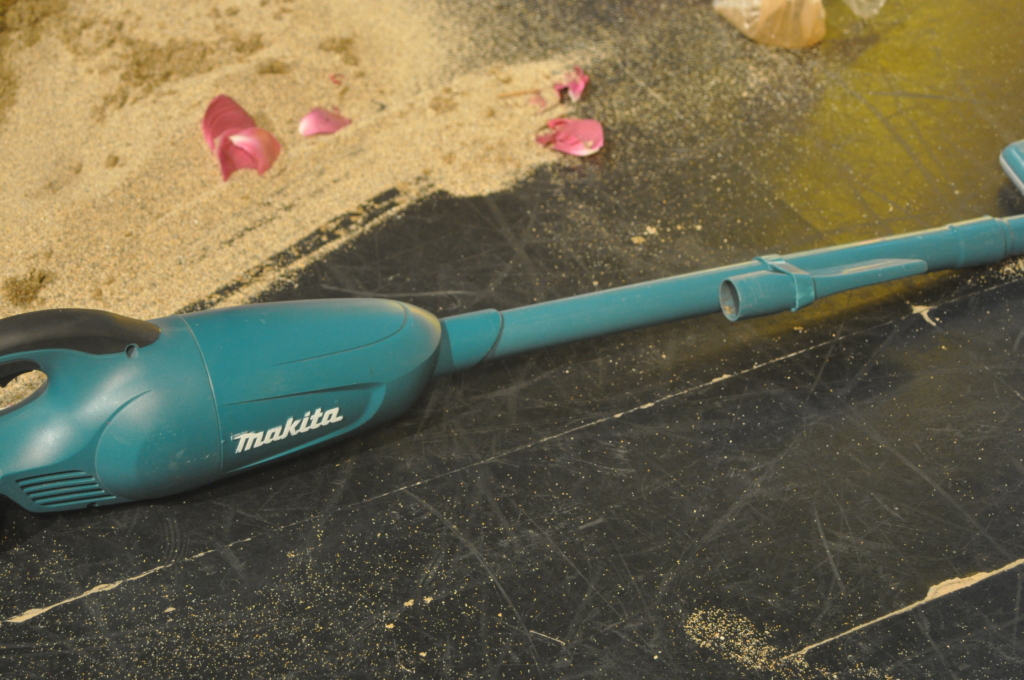
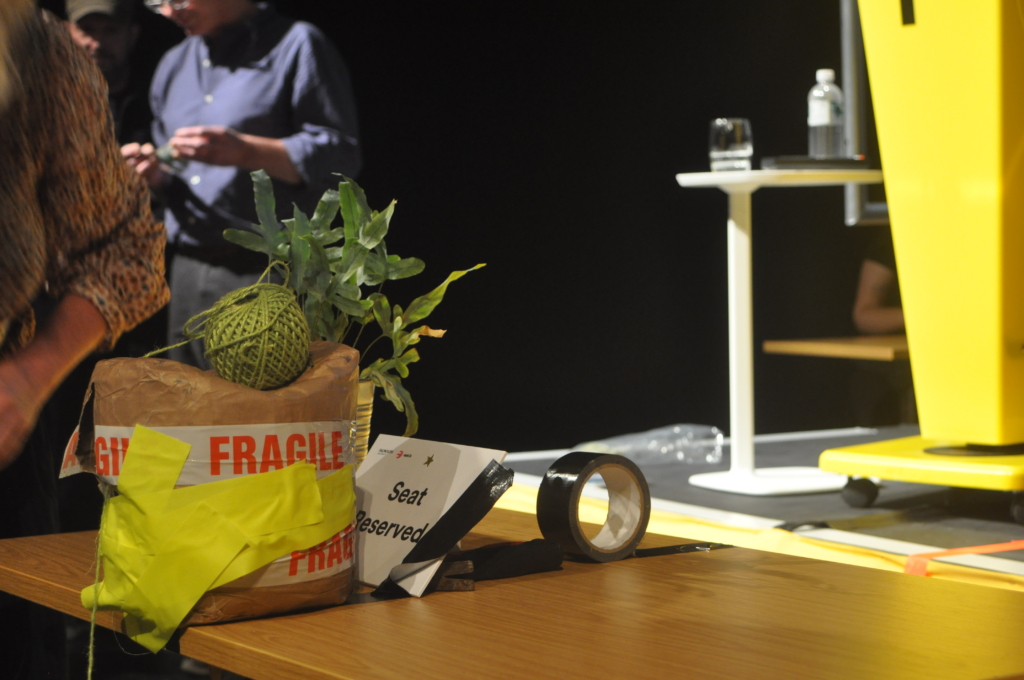
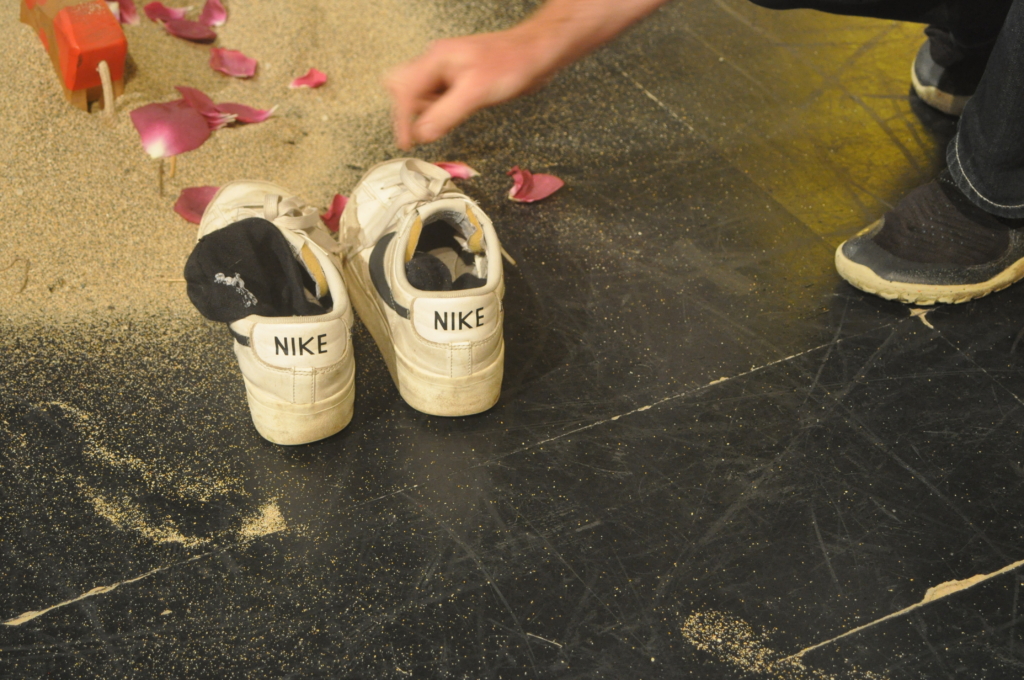
hoover Objects on a table Shoes, sand, stars

Three Presentations on the Importance of Education – 2023.

Three films about Education made for a job interview at Falmouth University. I am quietly enjoying figuring out how to teach and how to unlearn things in the vicinity of Fine Art, growing comfortable in the uncertain space of not knowing.


Triptych three films about education

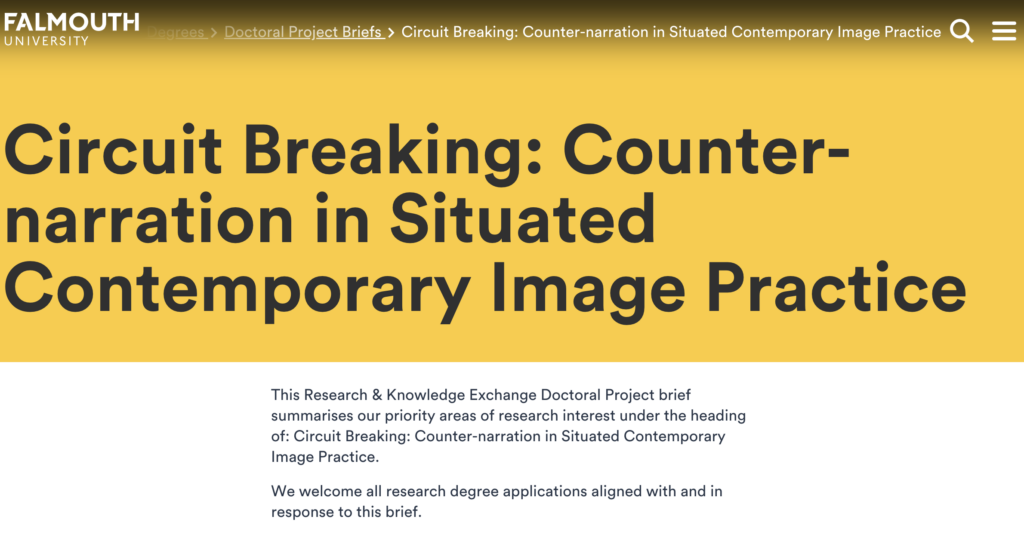
PhD briefs with Falmouth University are now LIVE!


https://www.falmouth.ac.uk/research/phd-mphil/doctoral-project-briefs/circuit-breaking

Alongside Dr. Neil Chapman, Dr. Simon Clarke and Dr. Laura Rosser I will be finding a place for this in the world. The use of images as a circuit breaker to interupt, interject and expand the trajectory of contemporary discourse, looking to develop forms of narrative that generate community and radical forms of localism in a time of ecological and economic precarity.

Soundcamp 2023

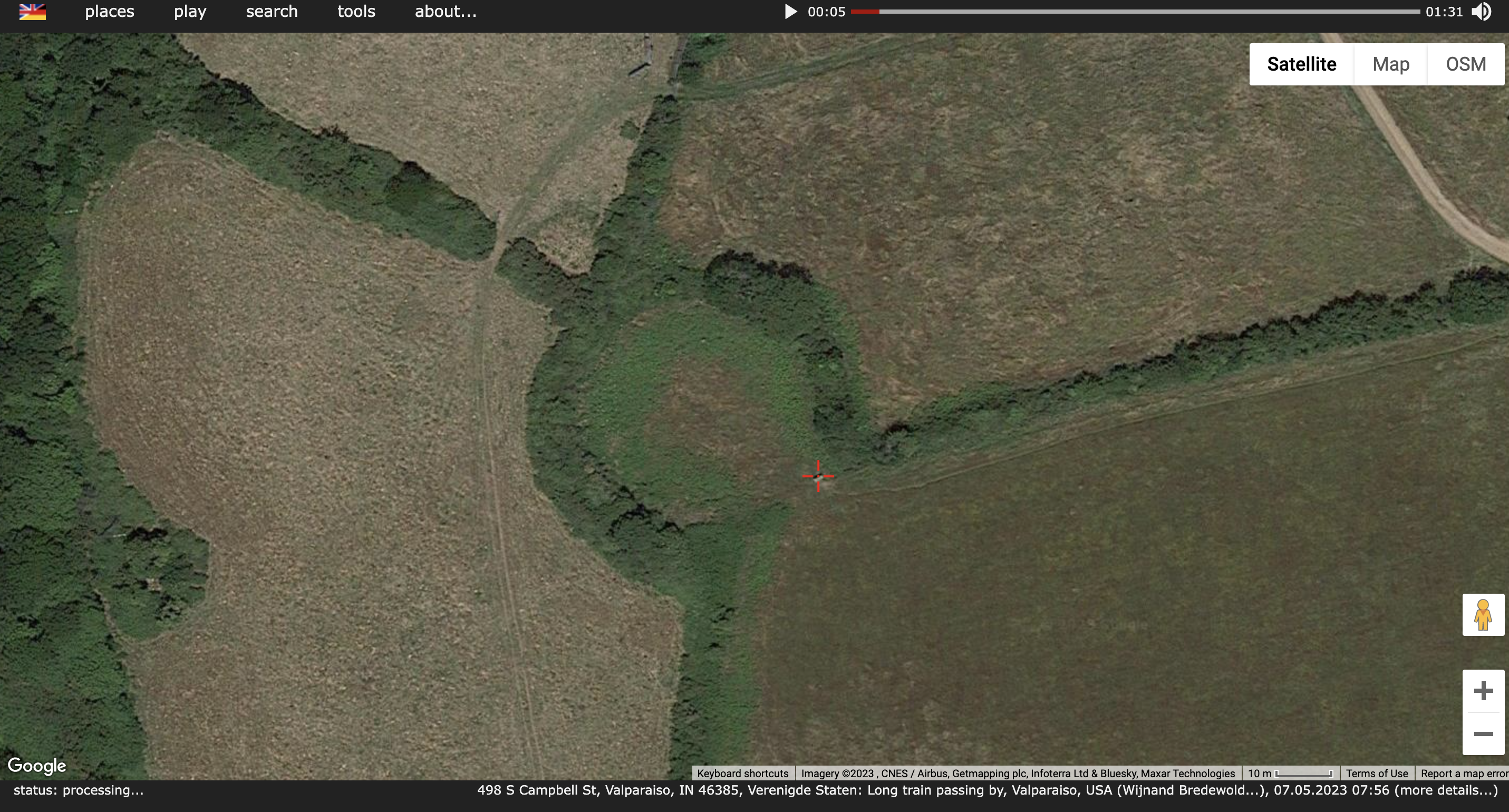
A recording of the Dawn chorus from scots quay is now available on Radio Aporee

Below are a series of stills and screen grabs from Saturday night and Sunday morning.

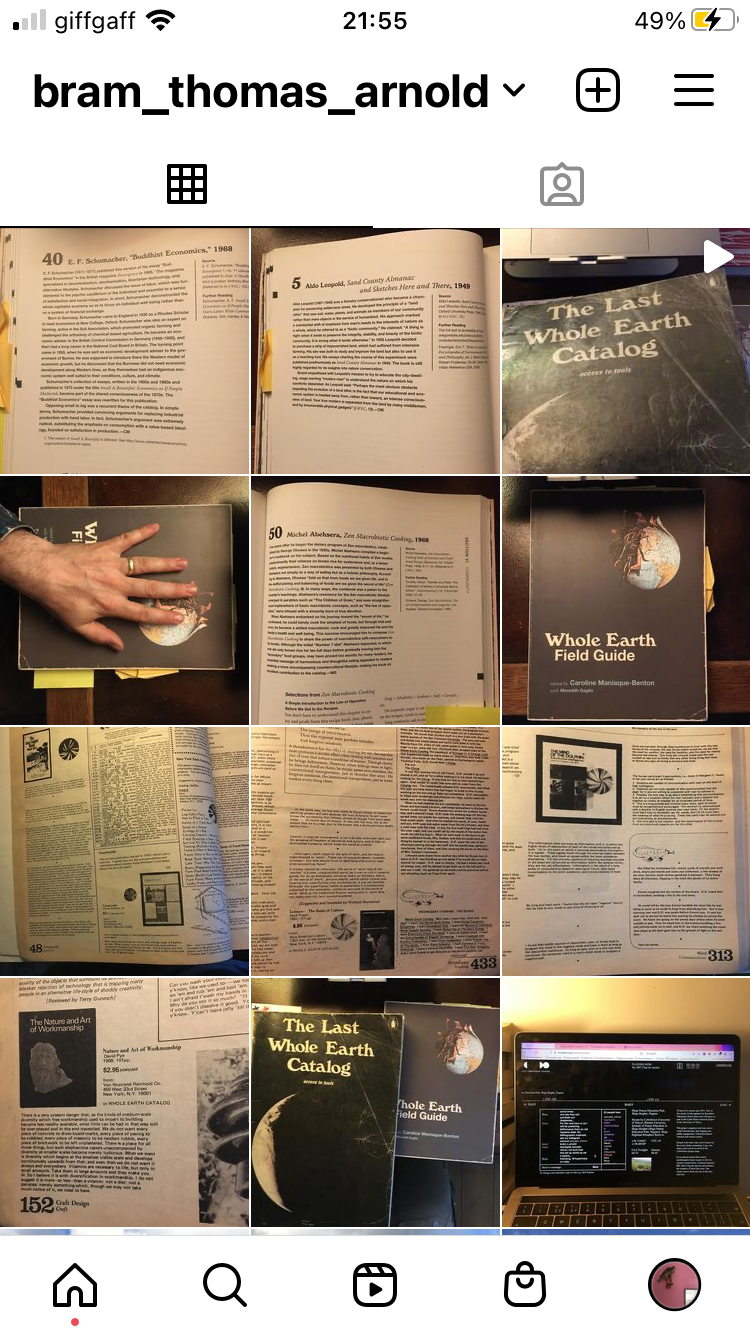
Instagram screen shot of bibliography

Instructions for Bibliomancy.
Composed live during SoundCamp 2023.

1. Place headphones on. Press play on the reveil live stream.
2. Listen a while.
3. Pick the book you wish to be for a while.
4. Place your non dominant hand on the cover of the book and breath.
5. With your dominant hand record an image of this for instagram so the world knows you exist.
6. Open the book.
7. Let your eyes drift over the page until they settle.
8. Read, select, type, send.
9. Use Google translate to translate that fragment into the language of the country you are currently listening to.
10. Repeat.

#7 “the marvel of […] life is the utter rationality of its pattern – amazingly small means leading to extraordinarily satisfactory results.” Taken from The Last Whole Earth Catalog, from a fragement by E.F. Schumacher.

For past Soundcamp notes and images from End of the World Garden see here


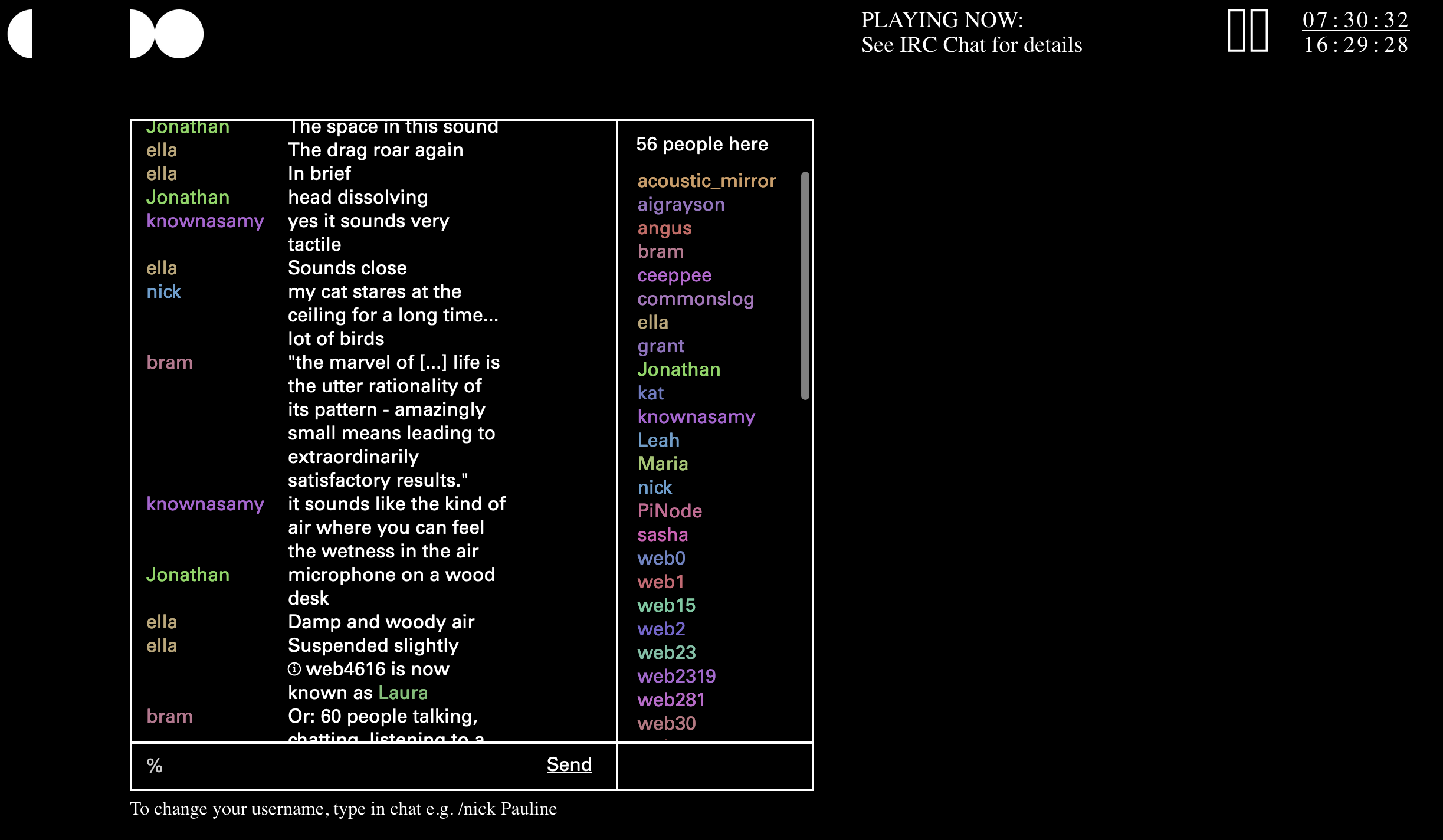
A website screenshot of Reveil 2023

Narrating the ecological meta-crisis

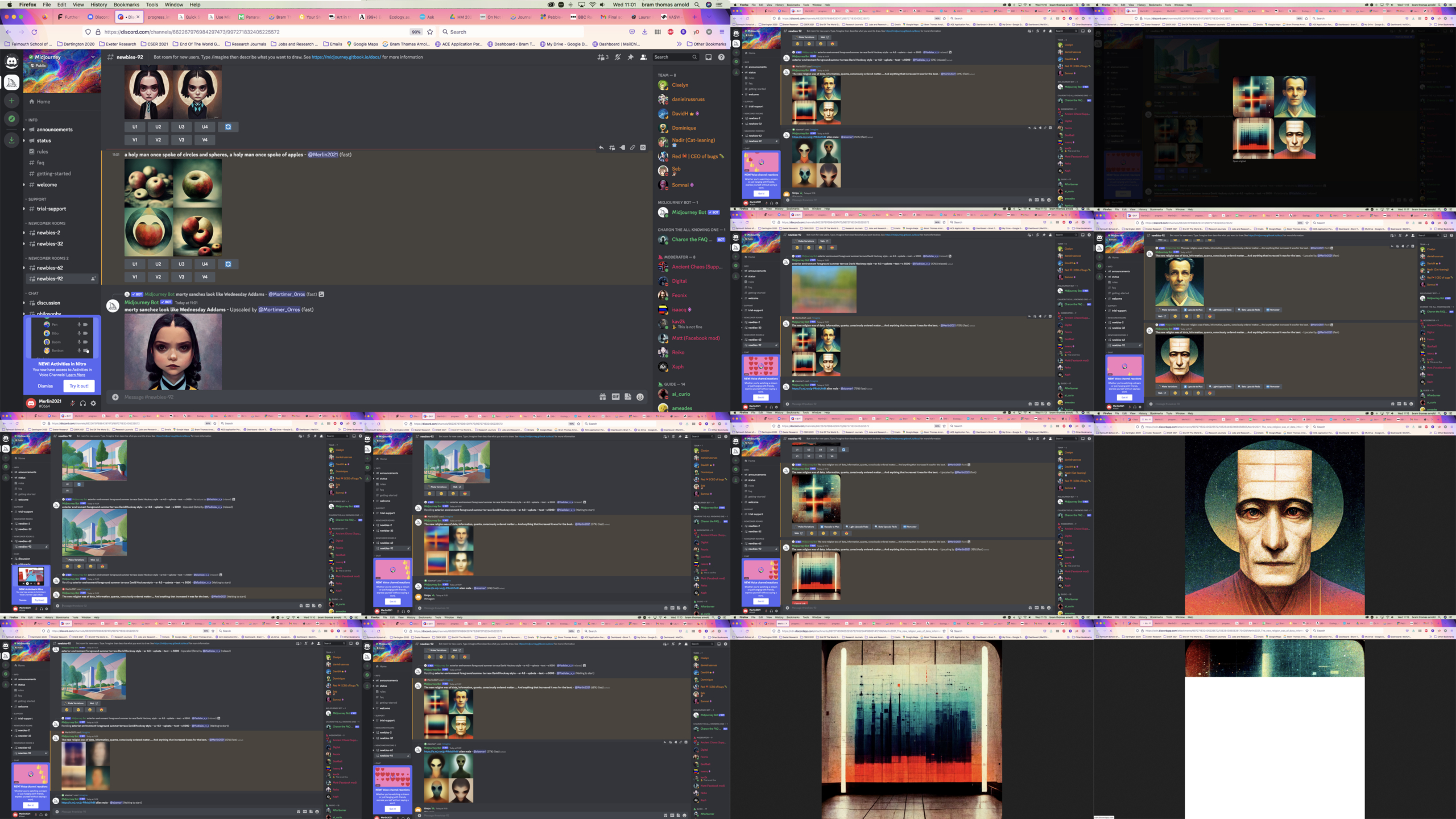
A collaboration with Dr. Lauren Holt of Cambridge University’s Centre for the Study of Existential Risk means I find myself signing up to discord and generating abstracted AI imagery from fragments of a poem we have written and recorded together that will be delivered in physical form in 20923 to a select bunch of globally dispersed AI programmers and policy makers in the hope that we may yet avert or at least mitigate the unfolding ecological meta crisis that even each of these individual characters on this webpage are a part of.

Images look a bit like this.

Discord process series


And then this, which I rather like for its Abakan-type tropes. More on this to follow…

A holy man once spoke of circles and spheres, A holy man once spoke of apples,

The new religion was of data, information, quanta, consciously ordered matter…. And anything that increased it was for the best.


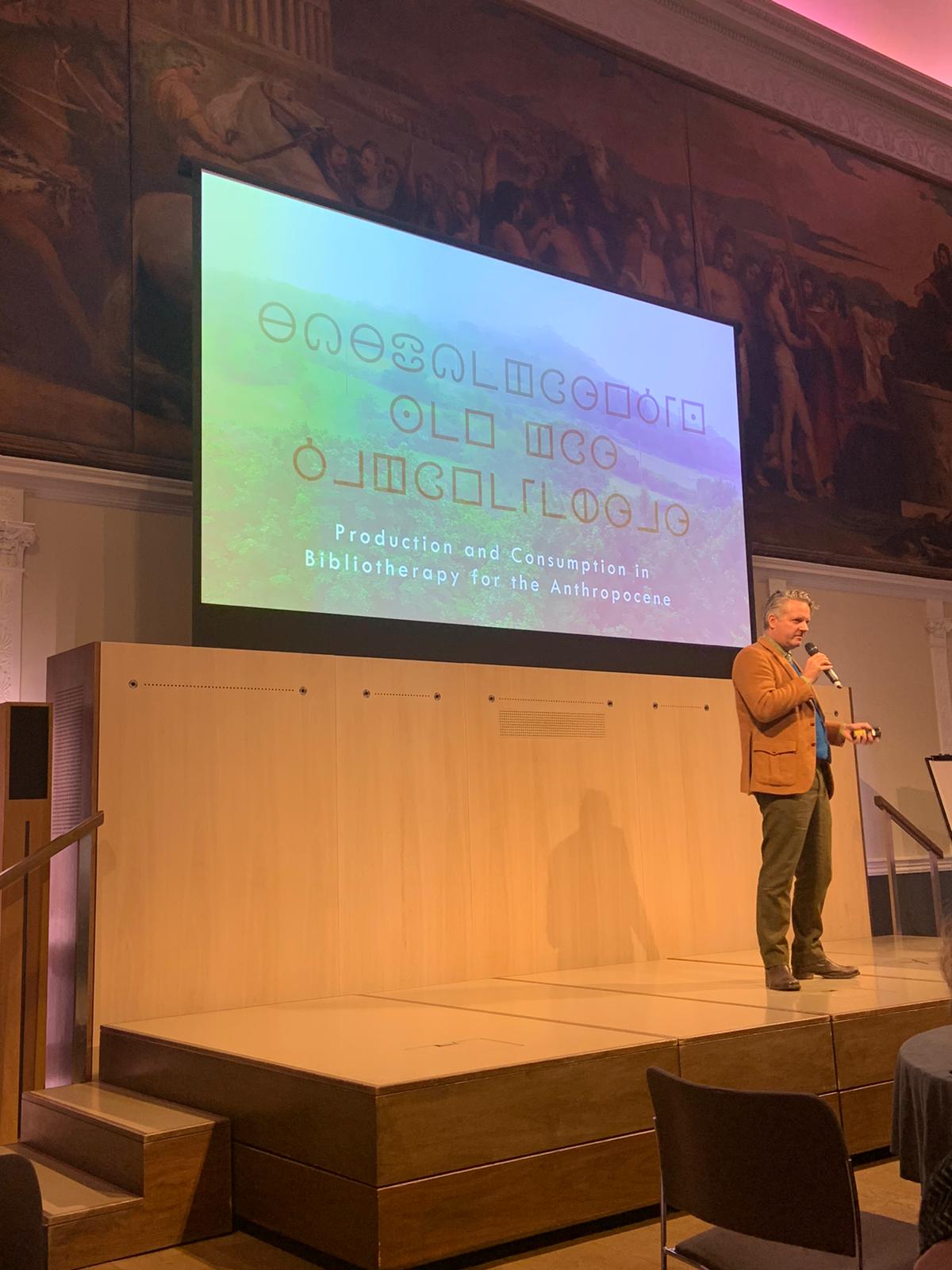
Production and Consumption in Bibliotherapy for the Anthropocene. RSA, London, November 2022.

Production and Consumption in Utopia


Below is a fragment from the opening of a presentation at the Royal Society of Arts, London in November, 2022. A revised version of this paper is to be published in a forthcoming special issue of Landscape Research Journal in 2023.


***


Bibliotherapy For The Anthropocene is a performance in the guise of a reading group: it is a cross between a faux-Quaker meeting, a reconvening of the Dead Poets Society, a space awash with awkward silences, cheap jokes and ways of coping with the end of the world, ways of coping with living in the Anthropocene: it is usually undertaken in a locked room and as such you are not currently a participant in a session of BftA, but merely being invited into a journey through some of its processes and fragments. No prior reading is necessary but I believe there was a brochure and most things are on the internet these days. Bibliotherapy For The Anthropocene tends to happen in a smallish lockable room, with some willing volunteers and some tea and some biscuits, and a dictionary. People come to gather together, everyone in a state of reverence, the sort of reverence one might bring to a church perhaps, everyone is there to listen and think and talk and wonder aloud and in silence at what it is to be alone and together at this time of geological change, transitioning not through choice but by necessity, from one geological epoch to another. I preferred it in the Holocene.

* * *

These are the sorts of things I might say at the beginning of a session of this quaker meeting come reading group come existential climate crisis version of an AA meeting.

After that, we’ll consult a holy fragment of text taken from the utopic writings of Buckminster Fuller who once orated:

I know that I am not a category, a hybrid specialization,

I am not a thing – a noun.

I seem to be a verb – an evolutionary process –

an integral function of the universe, and so are you.

On stage at the RSA

(Image courtesy of Joanna Blundell).

But before we go any further I want to dress this presentation with a perspective taken from the thinking of the artist Shelley Sacks, whose current project at Documenta in Kassel has been seeking to continue the work of her teacher Joseph Beuys. She states that there is a misconception around our conventional understanding of the notion of aesthetics, a misconception that can be easily addressed by considering its forgotten antonym – anaesthetics. To be anaesthetised is to be numbed, to be dead to the world, so that one could rip a tooth out without pain, or repair an injury or so on, to be aesthetised then, to be concerned with aesthetics, is to feel. So try not necessarily, to think it… try to feel this presentation.


***


Below is a slide from David Edwards’ presentation How Artists Influence Landscape Decisions: enriching pathways to impact.

Joseph Beuys quote

AALERT at the Royal Society, London.

I am going back to London. Presenting at the Creative Reflections symposium ‘On the plurality of creative approaches, their diverse uses and impacts on landscape decision-making’ at the Royal Society of Arts on the Strand. I will be reviewing five years worth of experimentation into Bibliotherapy for the Anthropocene amongst other landscapes… 18th November. Hope to see you there… Free event in person or online booking via https://www.eventbrite.co.uk/…/creative-reflections…

On Belonging and Longing to Be, After Metzger.

Bibliotherapy for the Anthropocene, Metzger, Kestle Barton
Image after a performance, Kestle Barton, 2022.

Bibliotherapy for the Anthropocene.

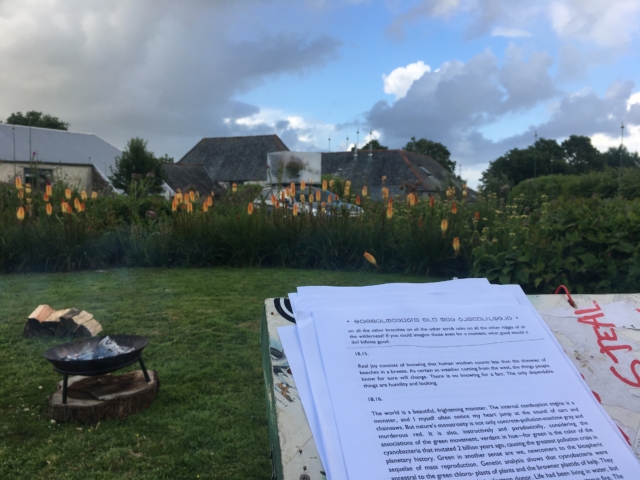
18.15.

Real joy consists of knowing that human wisdom counts less than the shimmer of beeches in a breeze. As certain as weather coming from the west, the things people know for sure will change. There is no knowing for a fact. The only dependable things are humility and looking.

An extract from Strata 18 of Bibliotherapy for the Anthropocene, performed at Assembly for Gustav Metzger at Kestle Barton, June 2022. Taken from The Overstory, by Richard Powers.

***

On Agri/culture 2.0 and Indigeneity.

Everything at the moment is cut through the half dazed state of toddler mornings and baby logistics and this weekend, at Kestle Barton, participating in the excellently choreographed Assembly was no different. It was a shame to not be at Glastonbury, it was a shame not to be at Loveland in nearby Penryn, but by the time Mat Osmond, lecturer, XR activist, illustrator and philosopher poet had finished talking, the heavens opening on the billowing tent in the meadow, I felt certain that I was in the right place. Sat on some straw bales a few miles from the most southerly tip of England with a small gathering of artists, activists, academics and human beings who were all looking for ways to belong, and perhaps also just longing to be.

Paul Chaney and I presented fragments from our practice as a shared history of how we arrived at the ideas we are developing with Kestle Barton under the moniker Agri/culture 2.0, an artists collective comprised of artists, chefs, botanists and academics.


“Do you eat?


Where does the money come from?


  1. a) Private funds
  2. b) State funds
  3. c) Sale of work
  4. d) Through being employed


Does it matter where your money comes from?


Do you feel responsible towards society?


  1. a) Are you doing anything about it or not?

If so, what is it that you are doing?


  1. b) Do you plan to affect society at some time in your future?

If so, will it be in the field of arts?”


The above taken from a flier for a Gustav Metzger talk at Slade School of Art in 1972. He was a radical, gentle but a radical, not one to shy away from subject matters of discomfort, not one to not do something because he was told not to do it… And these questions are still painfully, and increasingly relevant today, the grain silos of Ukraine are filling up, Russian ships blockade the black sea and as Africa begins to starve whilst also beginning to become an open waste site for our electronic waste that we, I, you, me, us are bound up in this. The war with Russia is another war fought on the grounds of global resources, behind the cloak of belonging and ideology. And so at this time of unfurling cliff edges, rolling chaos and socio-ecological collapse we spent some time in a tent asking:

Can artistic practice effect or trigger a slow transition to re-indigeneity?


Bibliotherapy for the Anthropocene: The Outer Circle.

BftA Install Shot Kestle Barton 2021 with logo


The Outer Circle


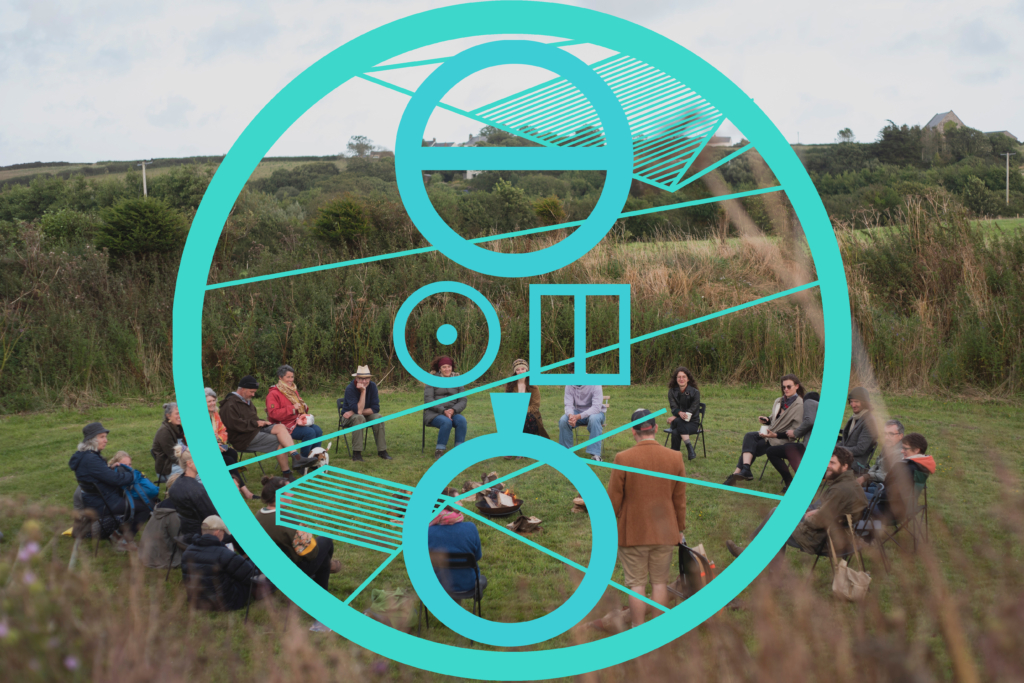
Bibliotherapy For The Anthropocene  is a performance in the guise of a reading group: it is a faux-Quaker meeting, a reconvening of the Dead Poets Society, a space awash with awkward silences, cheap jokes and ways of coping with the end of the world, ways of coping with living in the Anthropocene: it is usually undertaken in a locked room. No prior reading is necessary. Opportunities to participate are rare. We will come to gather together in a state of reverence, the sort of reverence you would bring to a church perhaps, to listen and think and talk and wonder aloud and in silence at what it is to be alone and together at this time of geological change, transitioning from one epoch to another. I preferred it in the Holocene.


* * *


There will be pieces of paper in everyone’s hands, there will be stickers, and biscuits and tea. Everyone will receive both something different and something the same, no one has to read out loud, no one has to say anything, everyone has to be present, everyone has to sit down, so find yourself a quiet place at a quiet time and join us on Friday 28th May at 6.30AM or Sunday 6th June at 7.30PM. At the end, we will find ourselves a song to listen to and quietly re-enter the world with a new perspective.


These are the rules

Everything else is up to you

Welcome to

Bibliotherapy For The Anthropocene


Bibliotherapy for the AnthropoceneArts & Culture University of Exeter

* * *

Car Crash to New Studio….

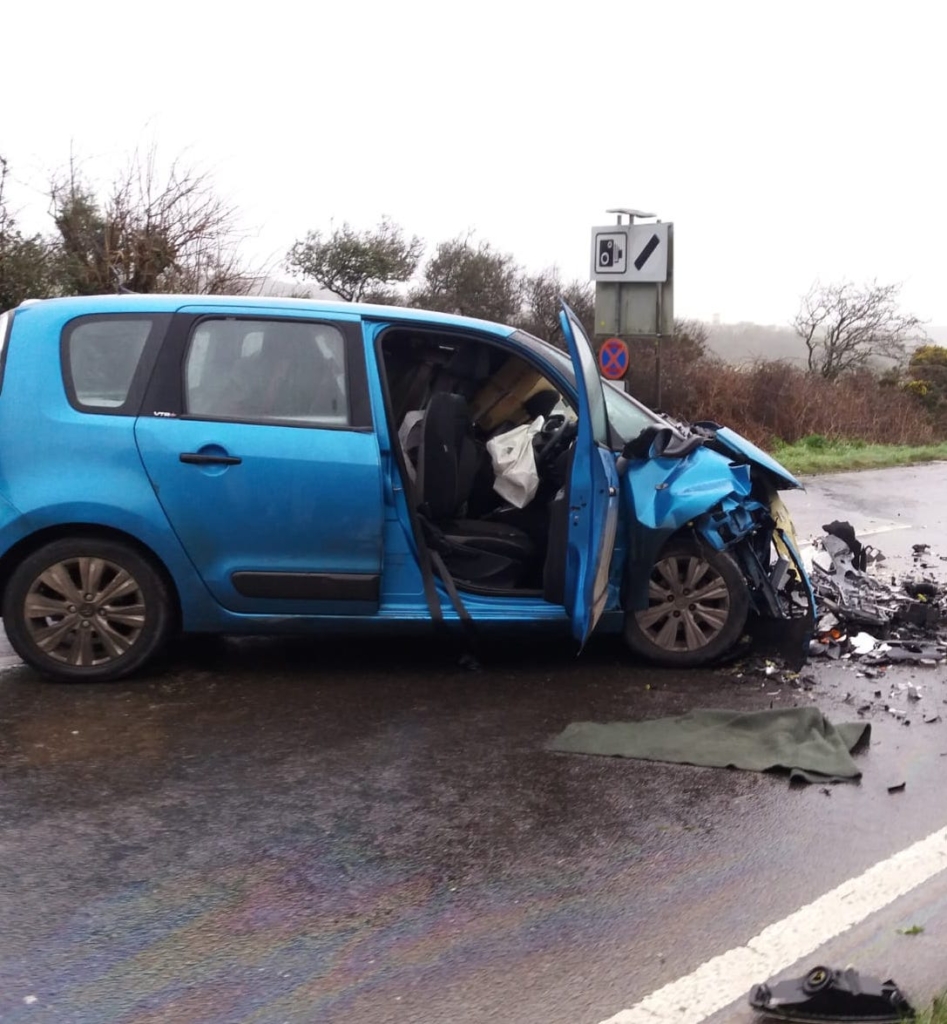
I moved studios. From Redruth to Penryn. On the last day, on the way to the tip, I had a car accident. I didn’t go back to the studio for 3 months. Image of a car accident


I then moved in to Gray’s Wharf in Penryn.

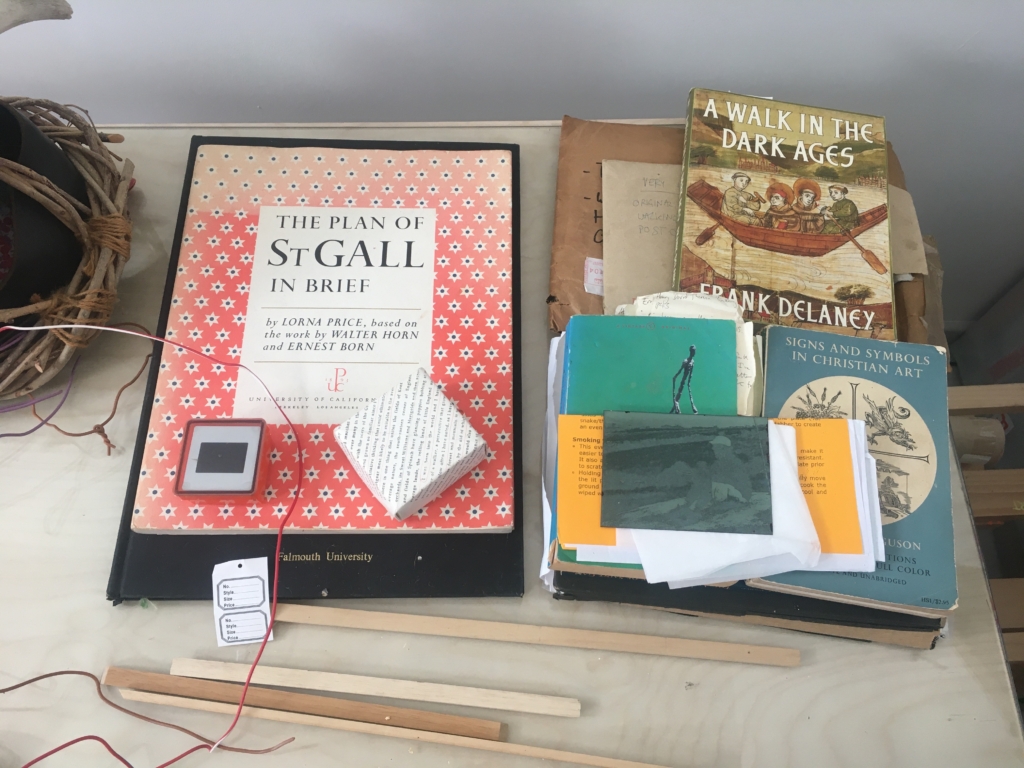
Where things are slowly starting to happen, like a forthcoming collaboration with Kestle Barton on the Lizard, and some new work with Utter&Press under the title The Plan of St. Gall.


Studio


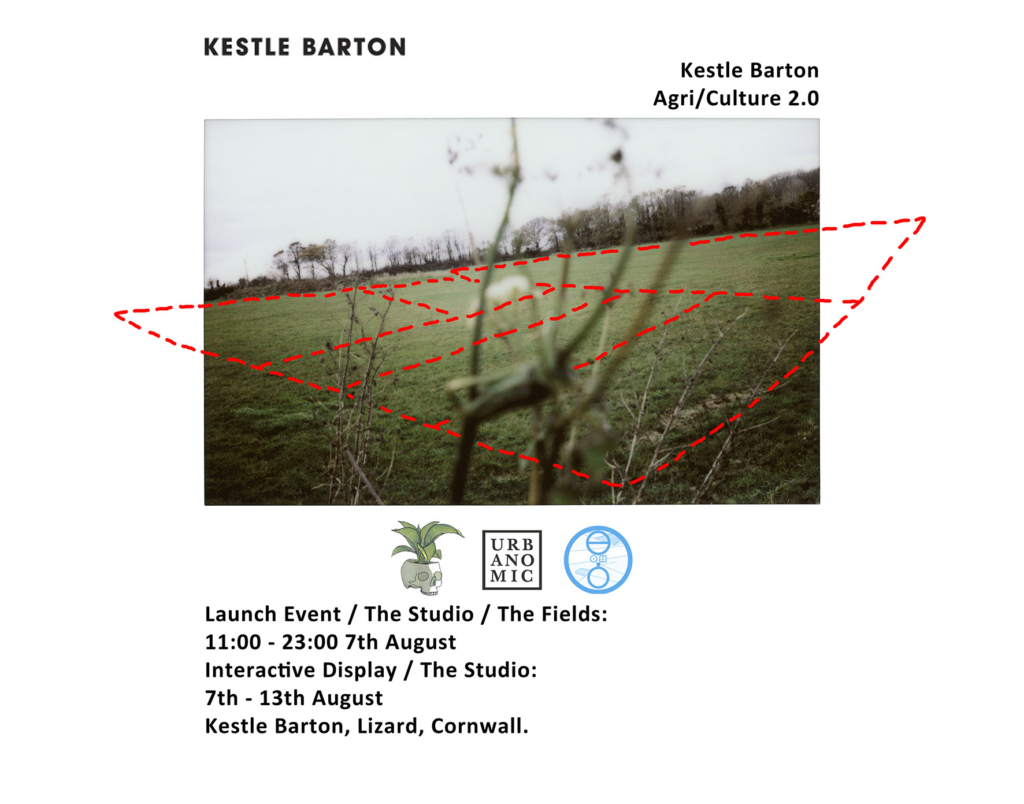
Agri/Culture 2.0

Agri/Culture 2.0 will, in the summer of 2021, present to the public a report Kestle Barton commissioned in 2020 to examine ways of reintegrating the 56 hectares of farmland at Kestle Barton into an experimental site for artists, agro-ecologists, academics, farmers, writers and the local community to work to together on new forms of experimental and creative land management.


We are having a launch event on Saturday the 7th August, from 11am – 11pm with artists talks, orchard tours and workshops; in the evening I will be hosting a presentation of my performance/reading group Bibliotherapy for the Anthropocene followed by an off grid disco hosted by Robin Mackay of the philosophy publishing house Urbanomic. Some camping spaces are available if you are that way inclined – please get in touch if so. Further info below and via this link.


7th August Launch event from 11am – 11pm.

7th – 13th Interactive Display on show in the Studio at Kestle Barton during opening hours.


Featuring: Paul Chaney, Bram Thomas Arnold, Urbanomic, Kathrin Bohm (MyVillages), William Arnold, James Fergusson, Andrew Ormerod.


The original report was coordinated by Kestle Barton’s associate artist Paul Chaney in collaboration with a team of Cornish and International artists, agroecologists, foresters and chefs including Kathrin Bohm (MyVillages), Dom Bailey (CAST café), Dr. Bram Thomas Arnold, James Fergusson, William Arnold, Mollie Goldstrom and artist duo Food Sketz. For the launch event members of the team will be present to introduce the possibilities of Agri/Culture 2.0 in collaboration with audience members and participants from the local community.

Bibliotherapy for the Anthropocene

NOW BOOKING AT OD ARTS FESTIVAL, SOMERSET:

http://odartsfestival.co.uk/bram-thomas-arnold/


The Outer Circle


Bibliotherapy For The Anthropocene is a performance in the guise of a reading group: it is a faux-Quaker meeting, a reconvening of the Dead Poets Society, a space awash with awkward silences, cheap jokes and ways of coping with the end of the world, ways of coping with living in the Anthropocene: it is usually undertaken in a locked room. No prior reading is necessary as all participants will receive a strata of the reading material as part of the invitation prior to their initiation into the group. For Alone With Everybody Bibliotherapy For The Anthropocene will be occupying that online working social everything-everything-space, that black hole of Calcutta of ambience, that modern day séance that is Zoom. Limited to only 20 participants per session we will come to gather together online, everybody alone in a state of reverence, the sort of reverence you would bring to a church perhaps, to listen and think and talk and wonder aloud and in silence at what it is to be alone and together at this time of geological change, transitioning from one epoch to another. I preferred it in the Holocene.


* * *


There will be pieces of paper in everyone’s hands labeled with titles like II. The Middle Way and III. The Inner Circle. Everyone will receive something in the post, everyone will receive both something different and something the same, no one has to read out loud, no one has to say anything, everyone has to have their microphones on, everyone has to have their cameras on, so find yourself a quiet place at a quiet time and join us on Friday 28th May at 6.30AM or Sunday 6th June at 7.30PM. At the end, we will find ourselves a song to listen to and quietly re-enter the world with a new perspective. These are the rules…

Everything else is up to you

Welcome to

Bibliotherapy For The Anthropocene


* * *

Sunlight, but dreaming.

Last year I was really excited to be the only artist commissioned to work with Cambridge University’s Centre for the Study of Existential Risk on an audio project working towards the Dasgupta Review into the Economics of Biodiversity that was commissioned by HM Treasury.

Working with Dr. Lauren Holt and using the notion of Bibliotherapy for the Anthropocene as the basis for the work Lauren and I undertook separate walks in our local area during Lockdown 1 and talked about the intrinsic value of biodiversity, the subsequent paper and recording of this conversation were turned into a Trail Mix[ED] edition and sent to a diverse international collection of scholars, theologians, philosophers and critical thinkers who were invited to give their own thoughts to the review. Their recorded walks from around the world, made as the pandemic was making its way around the world, were a deep dive into the philosophical webs of intrinsic value, moral status and uses of biodiversity and the natural world.

The Dasgupta Review was launched at the Royal Society a couple of weeks ago – full texts here.

…I heard voices

Bram Thomas Arnold.

Sometime in November.

(Or level 11 of the gauntlet that is 2020, as someone put it lately).
In January, we met in a café, nothing out of the ordinary, to talk about the sound of extinction, the noises we might be losing day to day, echoes in time, vanishing without a trace. Before I left I slipped a copy Franz J Broswimmer’s Ecocide: A short history of the mass extinction of species across the table. A book I bought in Oxford whilst an undergrad in 2002 or so, studying ecology and fine art, its aged well, its relevance, rarely dimmed, described as “essential for anyone who cares about conserving our environment for the future” the book highlighted the significance of the loss of biodiversity as one of the most significant issues of our time long before anyone uttered the phrase ‘the sixth mass extinction’.


Jodie wanted to create a library of extinct sounds, distributed across the public spaces of Plymouth, presented in books as tomes and tonal maps of an archive. The sound of a city and all those fractured noises we might be losing. By February it became apparent the recent emergence of a new virus may considerably change things. By March Jodie felt a bit ill and cancelled our meeting on the morning I was due to travel to Plymouth from Cornwall. I turned away from the platform and walked home. Little did any of us know at the time that that would be such a significant cancellation. I didn’t get on a train again until November. As we shunted into April and the first national lockdown so many noises suddenly vanished, whilst so many others suddenly emerged from beneath the detritus of late capitalism, bird song in city centres, the disappearance of the background hum of planes in the sky or the distant ever rumble of the A30 in a Cornish valley.


I never saw Jodie again, we moved our work online, we all did.


Around the same time I started working with the Centre for the Study of Existential Risk at Cambridge University, particularly examining the impacts of biodiversity loss. Jodie turned her project from a physically distributed archive of extinct sounds, to a fictive collaboration with Plymouth’s past, and a collaborative engagement with its future through her extant work with Noiselab.


We talked about how fiction in art holds the capacity to mirror unspoken truths about the world.


We talked about Delia Derbyshire, Daphne Oram, Dr. Tom Richard’s recent work and the BBC Radiophonic Orchestra…


We talked about Jamie Shovlin’s fictive post-punk band Lustfaust…

We talked about how and when audiences might encounter such an archival project, through fan clubs, subscriptions, zines, badges, stickers, events…


We talked about the Athenaeum, public callouts for information about Joan in shop windows, little adverts in the back of the NME back in the day, how to insert fiction into real life…


We talked about Joan Lyneham, a historic figure that Jodie was concocting, and about ways of embedding her in the reality of Plymouth’s past and the wider past of electronic music and feminist invention.


We talked about how the work might transcend the temporal strictures of a festival in September, how it might bleed out into the future and keep reinventing itself as an event, a cassette, a record, a walk on Dartmoor…

We’re still talking…


Jodie started to amalgamate her work with Noise Lab with this lost history of pioneering women in electronic music. She also started selling bespoke Casio cover versions on request through social media as a way of evading the lockdown doldrums. She drew in friends and co-conspirators – a website friend here, a bookmaking friend there, her Noise Lab crew. We talked about authorship and the capacity for art to transcend the structural logic of market forces, to reinvent forms of economy that are based on and drawn from community rather than consumption. We talked about the Plymouth Art Weekender as a form of communal invention, a net made of knots holding the city, and each of us as a knot in a net, responsible for holding it up for others, for making it work, for making work of it, for crafting it gently into being.


And we did occasionally still talk about extinction, and all the sounds we’re losing and gaining all the time as part of this sixth mass extinction, and how that thought had a part to play in her work on the Joan Lyneham archive, part of this performance of fictive history in the real present.


Mentoring Jodie was my first formal encounter with mentoring and I found it a fantastic proposition, and Jodie a thoughtful and open collaborator, a true artist, and despite the zoom-bound nature of our present existence I look forward to seeing what Joan Lyneham gets up to next, where she pops up, how she mutates, who re-members her, what traces of her fictive past begin to solidify as fragmented traces, myths and stories in the communal present of Plymouth’s live music scene…


See www.lynehamcollection.com for more on Jodie’s project for Plymouth Art Weekender.
A Transect for Trelowarren


I am an artist who started with walking and kept going, into performance; installation; drawing; academia; broadcasting and writing: walking is a humble and humbling act, put most simply it is the human way of getting about. Walking has become the foundation of my trans-disciplinary practice that was instigated at Oxford Brookes University where I studied undergraduate work in both Ecology, Gaia Theory and Fine Art, before undertaking the worlds first MA in Arts & Ecology at Dartington College of Arts. My practice and approach to study and research, and the ongoing blurring of those processes has manifested itself into a practice that does not restrict itself to traditional notions, boundaries, mediums or modes of practice: it is an ecological form of practice that is simultaneously Conceptual in its methods, Romantic in its outcomes. Walking Home saw me draw a line on a map from London back to Switzerland, an 800km long transect from the house I lived in back to the place I was born, a line that was first drawn, then walked, written, performed and talked into being through a practice-based PhD that appropriated methods from ethnography, ecology, performance and writing. For A Transect for Trelowarren I am once again looking forward to stepping out onto a line, first drawn and then walked and talked into being in collaboration with a team of ecologists and a country estate looking into the process of wilding, uncovering what is already there, what could be there and what should be there, and what those questions might mean, the composition of narrative gestures and performed texts out of fragmented conversations that take place along a transect that is aiming to cut through Cornwall, through contemporary Ecology, through the scientific method, through institutions, country estates or universities, with the aim of hosting an ongoing conversation around conservation.

“The fellowship is a fantastic opportunity to amalgamate, reconvene and gather together disparate fragments of a project I have been working my way around since I was 19, the attempt to cohere a form of arts practice that is eco-logical, and a form of eco-logical practice that is creatively and holistically driven.” – Bram Arnold for Arts & Culture Exeter, 2019.

Remote Performances: Actions For & Against Nature.

I am typing this in a small valley, 3 miles from the most Southerly tip of mainland England. And yet, I have also just read an extract from Ed Milibands’ speech to the Labour conference in Manchester, received an update on the US bombings of ISIS strongholds in Raqqa, Syria, as well as purchasing a copy of Hyperobjects by Timothy Morton. In short I have procrastinated my way through a good 45 minutes of precious time, that until recently in this house, I would have spent writing by hand in my notebook.


Contemporary remoteness is exposed by digital isolation, the proliferation of the off-grid retreat, the desperate attempts at attaining mobile signal, waving our phones in the air as we stand on tree-stumps in fields, or the enthusiasm with which one celebrates ones imminent off-gridness online – “I can’t wait! Five weeks of no internet, no phones at an ayurvedic retreat, see you all in November… ”.


I can also, however, remember a time (pre-mobile phones), in which I would step out of my front door in a city and luxuriate in the immediate remoteness one can feel when you realise that no one you know has any idea where you are right now. I used to walk the streets of Wellington in New Zealand in 2004 fuelled by this glorious sense of remoteness and isolation.

[…]

Remoteness, like Nature, has assumed an affiliation with the ‘Great Outdoors’, with wilderness, and wildness, the wild places. Yet whilst in Scotland, preparing for Remote Performances by wild-camping on the north face of An Gearanach facing Ben Nevis, I was still able to receive a text from a friend 656 miles away on the shores of the south coast of England, asking me when I’d be home.


Turn the damn things off. Step outside. Immediate remoteness is achieved. Half way up a hillside with a satellite and a bunch of technical wizards from London we were together alone at Outlandia, perpetually tweeting our excitement at all this space and all this time, to just be, existing in a perpetual state of contradiction. Anytime I received an unexpected txt or alert it made me wish I’d forgotten my charger.
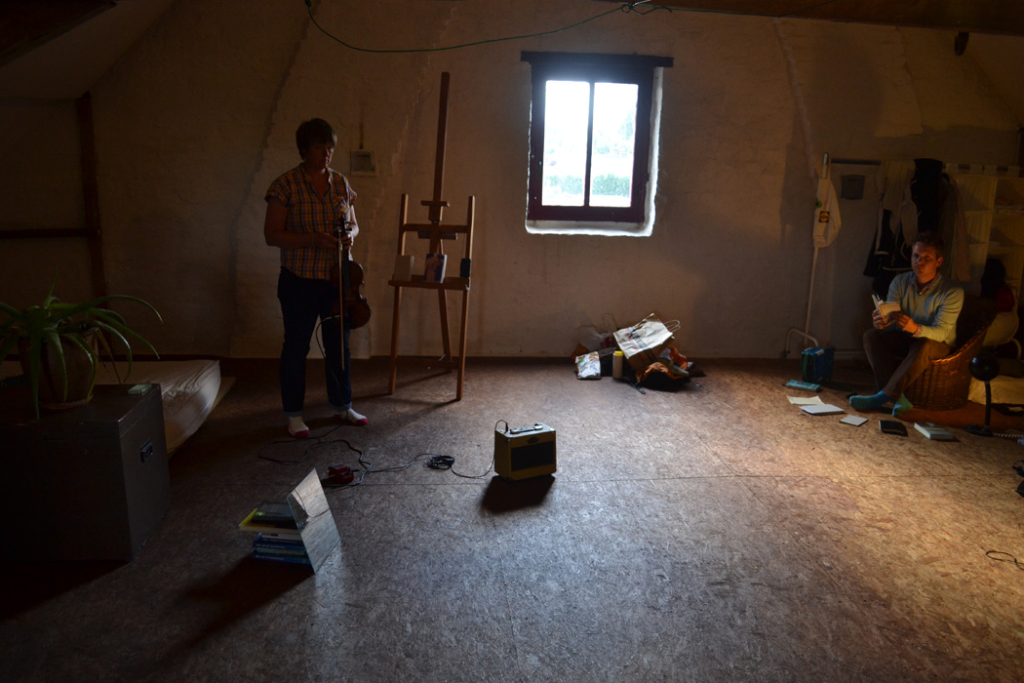
Extract taken from Remote Performances in Nature and Architecture, now available in paperback from Routledge.

A Belgian Transect

A Belgian Transect was a series of Field Broadcasts produced by Eleanor Wynne Davis and myself in 2012 as part Sideways Festival4. Over the period of a month commissioned artists and members of the public traversed a 400km line from West to East across Belgium. The thirteen broadcasts were the first time this technology had been used over a given period in this manner. This field report aims to introduce what we learnt through that process, and through this set out the technologies potential to arts practices that are of an ecological disposition.
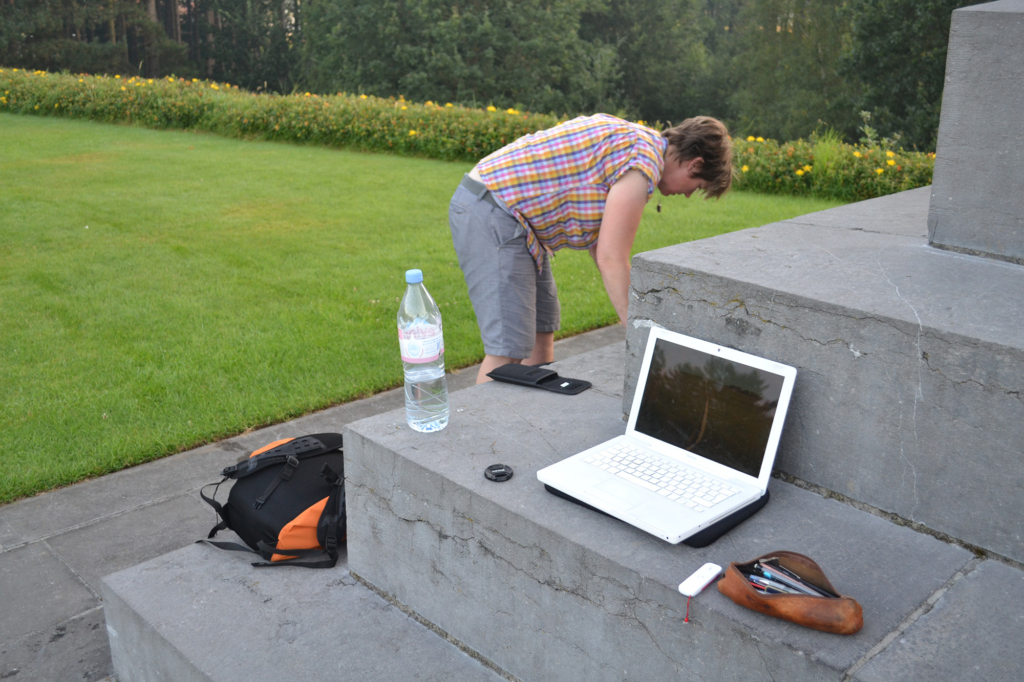
 

Davis and I met whilst studying for an MA in Arts & Ecology run collaboratively by Dartington College of Arts and Schumacher School of Holistic Science5. In his work The three ecologies Guatarri (2005) expands the scope of ecology to encompass the whole breadth of human endeavor, and so by ecological in the above paragraph I do not intend to refer to arts that deal with the ‘land & environment’ as set out by Kastner&Wallis (1998), but to practice that is open to the notion “no discourse is truly objective” (Morton 2013, 4). Here the term “ecology must stop being associated with the image of a small nature-loving minority or with qualified specialists” (Guattari 2005, 52), for here I intend ecology to be “a vast, sprawling mesh of interconnection without a definite center [sp] or edge” of which we are all a part (Morton 2012, 8). Ecology is the study of a natural system and what is humanity but a natural system fuelled by hidden connections, immense in its complexity. It is from traditional ecology however, that I have built upon the notion of a transect, where ‘transect’ is taken to mean: “A line used […] to provide a means of measuring and representing graphically the distribution of organisms” (Allaby 2004, 409). In this paper, the scale of the line is expanded to that of a distance walked across a given area, in this case Belgium, the samples then taken in this transect measure a culture and the interplay between two selves, Davis and I, within that culture. Thereby constructing a transect, a line “in a sense that is more visionary or metaphysical” than the physical presence of a length of string across a field in as in ecology fieldwork (Ingold 2007, 47). It is a line drawn first on a map, then walked, talked and performed into being by, in this case, the participants, coordinators and audience members of Sideways festival.