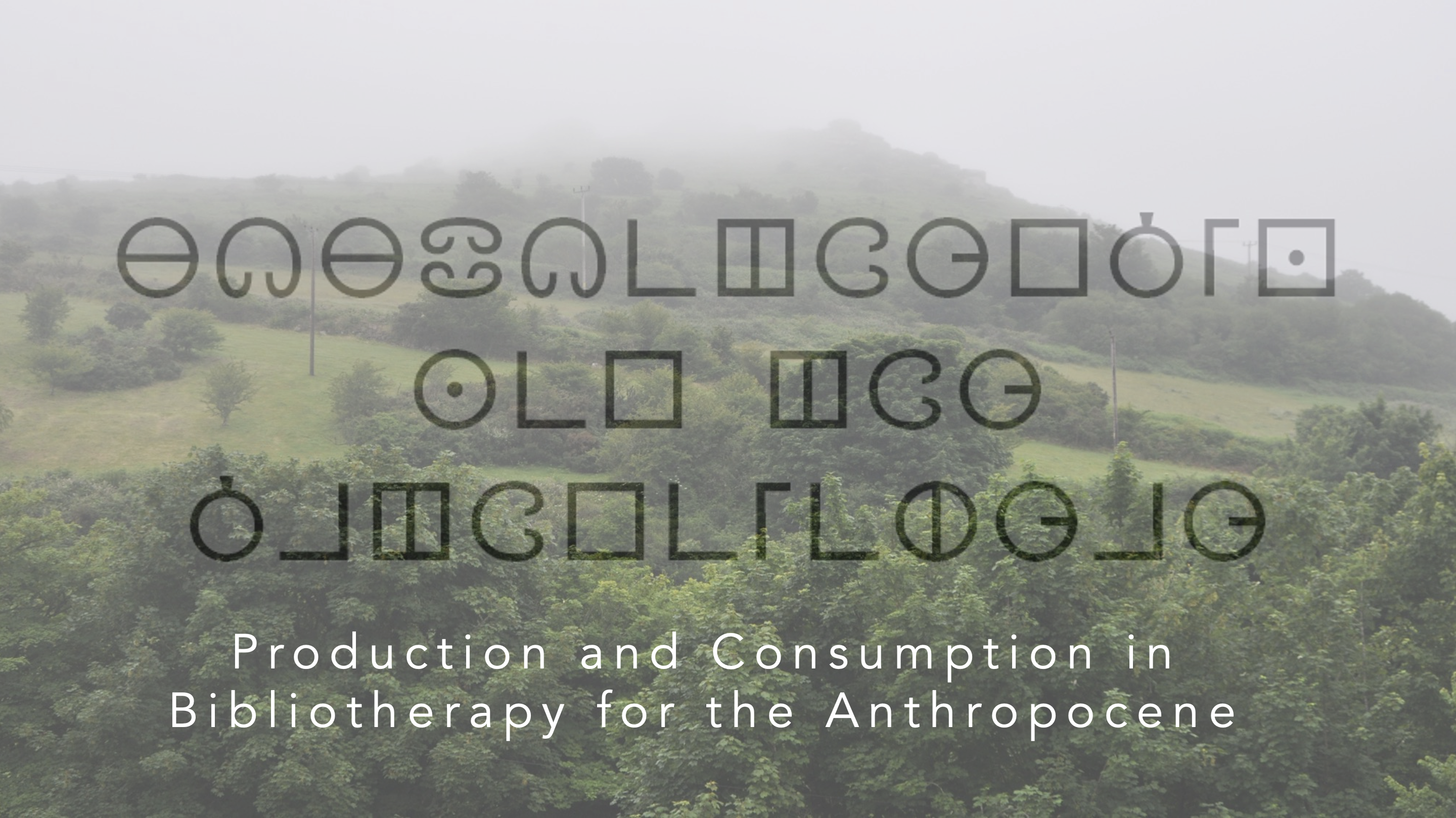
Below is a fragment from the opening of a presentation at the Royal Society of Arts, London in November, 2022. A revised version of this paper is to be published in a forthcoming special issue of Landscape Research Journal in 2023.
***
Bibliotherapy For The Anthropocene is a performance in the guise of a reading group: it is a cross between a faux-Quaker meeting, a reconvening of the Dead Poets Society, a space awash with awkward silences, cheap jokes and ways of coping with the end of the world, ways of coping with living in the Anthropocene: it is usually undertaken in a locked room and as such you are not currently a participant in a session of BftA, but merely being invited into a journey through some of its processes and fragments. No prior reading is necessary but I believe there was a brochure and most things are on the internet these days. Bibliotherapy For The Anthropocene tends to happen in a smallish lockable room, with some willing volunteers and some tea and some biscuits, and a dictionary. People come to gather together, everyone in a state of reverence, the sort of reverence one might bring to a church perhaps, everyone is there to listen and think and talk and wonder aloud and in silence at what it is to be alone and together at this time of geological change, transitioning not through choice but by necessity, from one geological epoch to another. I preferred it in the Holocene.
* * *
These are the sorts of things I might say at the beginning of a session of this quaker meeting come reading group come existential climate crisis version of an AA meeting.
After that, we’ll consult a holy fragment of text taken from the utopic writings of Buckminster Fuller who once orated:
I know that I am not a category, a hybrid specialization,
I am not a thing – a noun.
I seem to be a verb – an evolutionary process –
an integral function of the universe, and so are you.
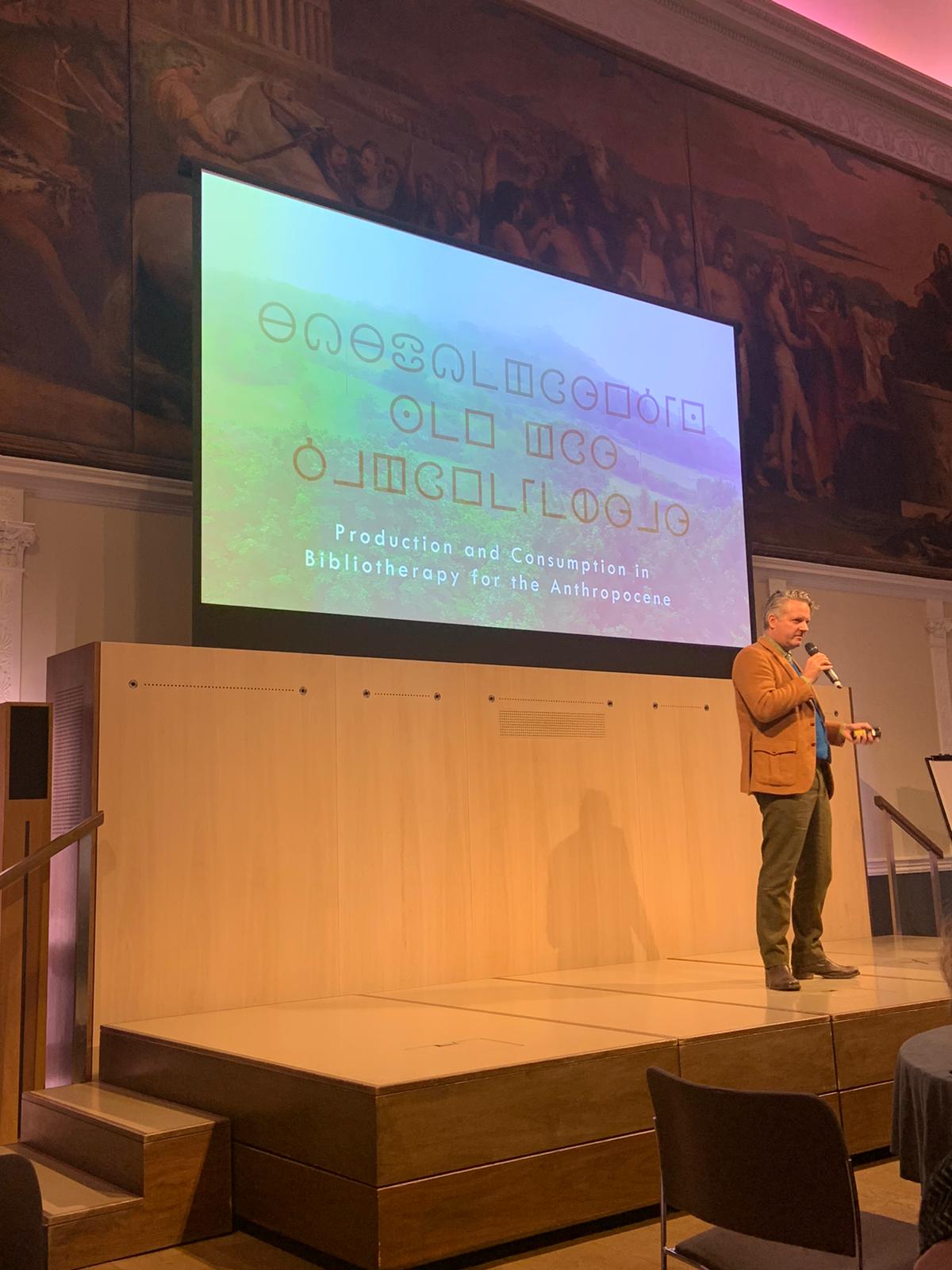
(Image courtesy of Joanna Blundell).
But before we go any further I want to dress this presentation with a perspective taken from the thinking of the artist Shelley Sacks, whose current project at Documenta in Kassel has been seeking to continue the work of her teacher Joseph Beuys. She states that there is a misconception around our conventional understanding of the notion of aesthetics, a misconception that can be easily addressed by considering its forgotten antonym – anaesthetics. To be anaesthetised is to be numbed, to be dead to the world, so that one could rip a tooth out without pain, or repair an injury or so on, to be aesthetised then, to be concerned with aesthetics, is to feel. So try not necessarily, to think it… try to feel this presentation.
***
Below is a slide from David Edwards’ presentation How Artists Influence Landscape Decisions: enriching pathways to impact.
